
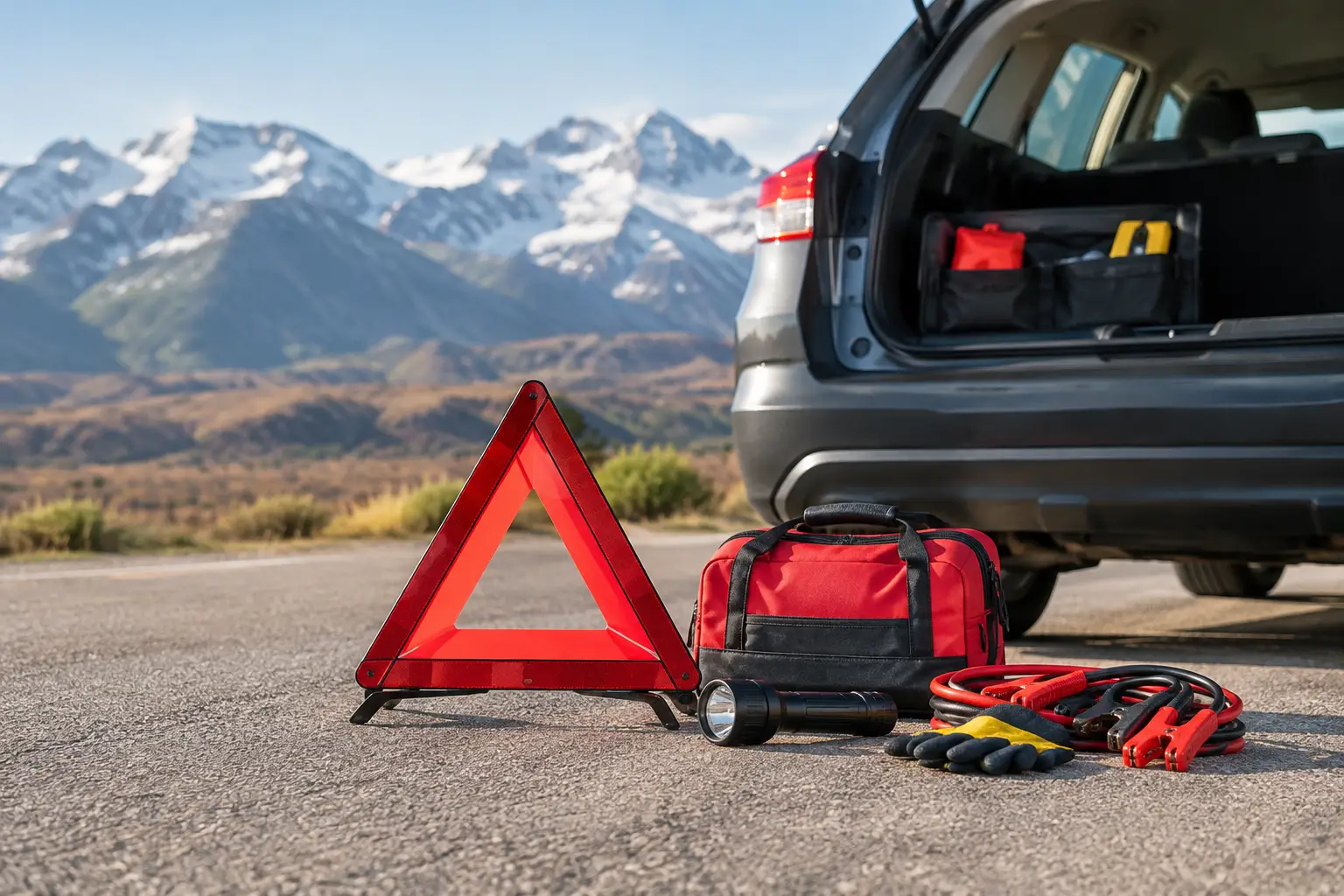
A dead battery in a West Valley City parking lot is annoying. A dead battery on I-215 after dark, with snow starting to fall, is a different problem. The best roadside safety kit is not a fancy box packed with gadgets you do not know how to use. It is a small set of reliable items that helps you stay visible, warm, prepared, and out of harm’s way until you can get moving again or roadside help arrives.
For Salt Lake Valley drivers, a good kit needs to handle more than one kind of bad day. Summer heat, winter storms, canyon drives, construction zones, long commutes, and late-night errands all create different risks. Build your kit around the problems that actually leave people stranded: flat tires, dead batteries, low visibility, lockouts, overheating, and waiting safely beside the road.
What Makes the Best Roadside Safety Kit?
The right kit is practical, compact, and easy to reach. If your emergency supplies are buried under sports gear, grocery bags, or a stroller, they will not help much when traffic is flying past you. Keep core items together in a weather-resistant bag or small plastic tote in the trunk, cargo area, or under-seat storage.
Skip the temptation to buy the biggest pre-packed kit you can find. Many include a pile of lightweight tools and a tiny first-aid packet, but leave out gear that matters in Utah weather. A better approach is to start with a basic kit and add items that match your vehicle, commute, and season.
A commuter who stays near Salt Lake City may need different supplies than someone who drives through snow in Herriman, takes kids to games in Draper, or heads into the mountains on weekends. The goal is not to prepare for every possible disaster. It is to handle the first critical minutes safely.
Gear That Should Be in Every Vehicle
Start with visibility and communication. If your vehicle stops on a shoulder, other drivers need to see you before they reach you. Reflective triangles are one of the best items you can carry because they do not need batteries and can be seen from a distance. Keep a reflective vest in the driver’s door or glove box so you can put it on before stepping outside.
A bright flashlight or headlamp is also non-negotiable. A headlamp is especially useful because it leaves both hands free for checking a tire, connecting jumper cables, or finding items in the trunk. Check batteries twice a year, or choose a rechargeable model and make sure it is charged. Do not rely only on your phone flashlight. Your phone battery may be the one thing you need to preserve for calling for help.
Your basic roadside safety kit should also include:
- Three reflective warning triangles or LED road flares
- A charged flashlight or headlamp with spare batteries
- A reflective safety vest and a pair of durable work gloves
- A compact first-aid kit with bandages, gauze, antiseptic wipes, and any needed personal medication
- A phone charging cable and backup power bank
- A multipurpose tool, duct tape, and zip ties for minor temporary fixes
These are not meant to turn you into a roadside mechanic. They give you a safer way to assess a situation and make small, sensible moves while you wait for professional assistance.
Items for a Flat Tire
A spare tire does not do much good if it is flat, missing tools, or inaccessible. Check that your spare is properly inflated and that you have the correct jack, lug wrench, and key for locking lug nuts. If your vehicle uses a tire repair kit instead of a spare, read the instructions before you are stuck on the shoulder in freezing weather.
Add a tire pressure gauge and a small portable air compressor. A slow leak might be manageable long enough to get off a busy road or reach a nearby tire shop. That said, do not try to change a tire on a narrow shoulder, blind curve, or high-speed roadway. A fast tow or roadside tire service is the safer call when traffic leaves no room to work.
Gear for Dead Batteries
Battery failures are common when temperatures drop, but they can happen year-round. Keep quality jumper cables in your vehicle, preferably heavy-duty cables long enough to reach between two cars parked safely. A portable jump starter is even better for solo drivers because it does not require finding another vehicle.
Choose a jump pack with clear instructions and keep it charged. Most people buy one, toss it in the trunk, and discover it is empty six months later. Put a reminder on your calendar to check it every few months. If you smell sulfur, see leaking battery fluid, or notice a swollen battery case, do not attempt a jump. Move away from the vehicle and call for help.
Winter Adds a Different Level of Risk
Utah winter driving can change quickly. One minute, roads are wet. The next, the temperature drops, slush freezes, and a short drive becomes a long wait. Your winter kit should be more than a blanket and good intentions.
Pack a warm blanket or sleeping bag, extra gloves, a knit hat, hand warmers, and dry socks. Add bottled water and shelf-stable snacks such as protein bars, nuts, or crackers. Keep them fresh and replace items that freeze, melt, or expire. A small shovel and ice scraper are worthwhile if you park outdoors or travel during storms.
Sand, cat litter, or traction mats can help when a tire is spinning on packed snow. Use them only when you can do so safely and your vehicle is not buried, damaged, or stuck in a dangerous location. Spinning tires hard can dig you in deeper and damage your drivetrain.
If you are stranded in cold weather, stay with the vehicle unless a safe, nearby shelter is obvious. Your car is easier for responders to locate than a person walking in poor visibility. Clear snow from around the exhaust pipe before running the engine, crack a window slightly, and run the heater only in short intervals if needed. Carbon monoxide is not something to gamble with.
Do Not Forget Heat, Water, and Everyday Problems
Summer roadside trouble comes with its own hazards. A vehicle can become dangerously hot fast, especially for children and pets. Keep drinking water in your kit, but rotate it regularly. In extreme heat, bottles can degrade or leak, so inspect them often.
A sunshade, sunscreen, and a small umbrella can make waiting more manageable if you are safely away from traffic. If your engine is overheating, turn off the air conditioning, pull over safely, and shut the vehicle down. Never remove a radiator cap from a hot engine. Steam burns happen fast, and adding cold water to a hot system can make an expensive problem worse.
For daily life, add a few simple items that save hassle: a spare key plan, a printed emergency contact card, and a note with your insurance information. If you use prescription medication, keep a small backup supply when appropriate and safe to store in your vehicle. Families should also consider diapers, wipes, a small activity item, and extra water for children.
Where to Store Your Roadside Kit
Your kit should be organized in layers. Put the items you may need before stepping out of the vehicle – phone charger, flashlight, vest, and emergency contact information – within reach of the driver’s seat. Store the larger bag or tote in the trunk for everything else.
Avoid loose supplies rolling around in the cargo area. A hard stop can turn tools, jump packs, and water bottles into projectiles. Secure heavier gear, and keep fuel-related items only if they are approved for vehicle storage and tightly sealed.
Check your kit at the start of winter and summer. Replace dead batteries, expired food, used first-aid supplies, cracked water bottles, and damaged cables. Test your spare tire and jump starter. Ten minutes in your driveway is far cheaper than finding out something is missing during a stressful breakdown.
When a Kit Is Not Enough
A roadside kit can make you safer, but it cannot solve every problem. After a collision, on a freeway shoulder, during severe weather, or when your vehicle is disabled in an unsafe spot, your priority is getting out of danger and calling for help. Do not crawl under a vehicle, stand near traffic, or try a repair that puts you in the travel lane.
If you are stranded anywhere in Salt Lake Valley, Munnster Towing provides 24/7 roadside assistance, jump starts, tire help, lockout service, fuel delivery, and affordable towing when the problem is bigger than a quick fix. Give dispatch your exact location, vehicle description, and the safest details you can provide.
Keep the kit stocked, keep your phone charged, and trust your judgment. If the road does not feel safe, get visible, stay protected, and let a professional handle the hard part.
continue reading
Related Posts
Towing versus transport comes down to your vehicle, distance, and urgency. See which option protects your car and gets it where it needs to go safely.
Roadside assistance versus mechanic: learn who to call for a flat tire, dead battery, lockout, warning light, or breakdown in Salt Lake Valley fast.
How long does towing take? Learn what affects tow truck arrival and transport time in Salt Lake Valley, plus steps that help get help moving fast today.