
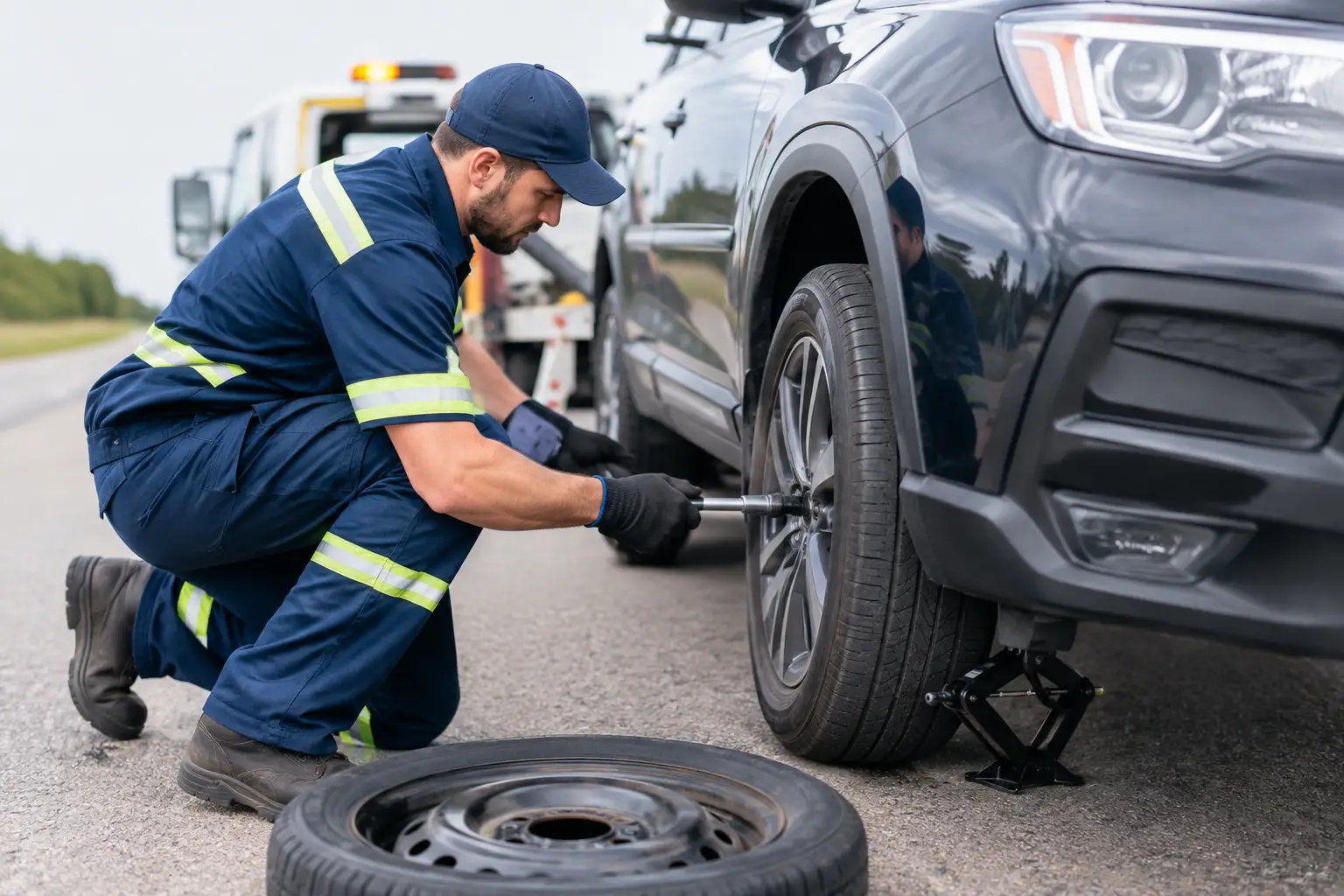
A flat tire can turn a normal drive through Salt Lake Valley into a long, cold wait on the shoulder. So, can roadside services change tires? Yes – in most cases, a roadside technician can safely remove the flat and install your usable spare right where you are. That means less time wrestling with a lug wrench, less risk from passing traffic, and a faster path back to your day.
The key word is usable. Roadside tire service is usually a spare-tire installation, not a full tire repair or replacement. If your vehicle has the right spare, the correct tools or factory jack points, and a safe place for the work, help can often get you moving again without a tow.
Can Roadside Services Change Tires at the Roadside?
Yes. A qualified roadside technician can typically secure the vehicle, loosen and remove the damaged wheel, install the spare, tighten the lug nuts properly, and check the tire pressure when possible. It is practical help for drivers who do not have the tools, physical ability, confidence, or safe conditions to change a tire themselves.
This service is especially useful when the flat happens in a parking lot, at home, outside work, or on a road with enough space to pull well away from traffic. A technician can handle the job while you stay out of harm’s way and make arrangements for the rest of your day.
But roadside service has limits. A spare is designed to get you to a tire shop, not to become your everyday tire. If it is a compact temporary spare, follow the speed and distance limits printed on its sidewall. Many temporary spares should not be driven above 50 mph, and they may affect handling, braking, and traction – a serious consideration during Utah rain, snow, and icy conditions.
What a Technician Needs to Change Your Tire
A roadside tire change goes smoothly when the vehicle and location cooperate. Before help arrives, look in your trunk, cargo area, or under the vehicle to confirm that you actually have a spare. Some newer vehicles come with tire inflator kits instead of spare tires, while others have run-flat tires and no spare at all.
A technician also needs a reasonably safe, stable place to work. Loose dirt, a steep slope, deep snow, narrow highway shoulders, and active traffic lanes can make jacking up a vehicle unsafe. In those situations, towing the vehicle to a safer location or tire shop may be the smarter call.
If you can do so safely, pull as far from traffic as possible, turn on your hazard lights, and park on level ground. Put the vehicle in park, set the parking brake, and avoid opening doors toward traffic. Do not stand beside the vehicle on the road side while waiting. A flat tire is frustrating. Becoming visible to distracted drivers is worse.
When you call for roadside help, share your exact location, vehicle type, and whether you have a spare. Let the dispatcher know if you are on a highway, in a parking garage, at an apartment complex, or stuck somewhere with poor access. Clear details help the right truck and equipment get sent the first time.
When a Tire Change Is Not the Right Solution
Not every flat can be solved by putting on a spare. If the spare is damaged, flat, missing, or badly aged, it may not be safe to install. The same goes for a donut spare that is already on the vehicle and has failed. Roadside assistance can still help, but the likely next step is towing.
A tow may also be necessary if more than one tire is flat, the wheel is bent or cracked, the vehicle has suspension damage, or the tire blew out after hitting debris or a curb. There is no benefit in forcing a quick fix when the vehicle is unsafe to drive.
Some vehicles need extra care. Large trucks, heavy SUVs, vehicles with specialty wheels, low-clearance sports cars, and vehicles with locking lug nuts can require specific tools or a different approach. If your vehicle has a wheel lock key, keep it in the glove box or with the spare tire tools. Without it, the locking lug nuts may not come off at the roadside.
Electric vehicles and hybrids can also have specific lift points and tire requirements. Experienced roadside professionals know that guessing around a vehicle’s battery housing or underbody is not an option. Careful positioning matters just as much as speed.
What Roadside Tire Service Usually Includes
A standard roadside tire-change visit focuses on getting a safe, inflated spare onto the vehicle. The technician will assess the situation first, position the vehicle appropriately, and use the recommended lifting points where conditions allow. They will then remove the flat wheel, install the spare, and secure the lug nuts.
What it usually does not include is patching the damaged tire on the spot, mounting a new tire, balancing a wheel, or diagnosing deeper alignment and suspension issues. Those jobs belong at a tire shop. Roadside service is the fast bridge between being stranded and getting to the shop that can complete the repair.
That distinction can save you money and headaches. A small puncture in the tread may be repairable, but a sidewall cut, large tear, or severely driven-on flat generally means the tire needs replacement. Continuing to drive on a flat can destroy the tire and damage the wheel, turning a simple nail puncture into a much more expensive repair.
Should You Change It Yourself or Call for Help?
If you are in a safe, well-lit location, know where your spare and tools are, and feel comfortable doing the work, changing a tire yourself can be reasonable. It is still physical work, though. Lug nuts can be extremely tight, weather can make the ground slick, and vehicle jacks must be placed correctly.
Calling roadside service makes more sense when traffic is close, it is dark, the weather is bad, you are carrying children, you are not physically able to manage the tire, or you simply do not want to take the risk. There is no prize for changing a tire beside fast-moving traffic at midnight.
For commuters, rideshare drivers, and anyone on a schedule, the bigger issue is often time. A professional can get the spare installed while you handle work calls, arrange pickup for the kids, or figure out where to get the tire repaired. That convenience matters when one flat tire has already disrupted enough of your day.
How to Avoid Trouble After the Spare Is Installed
Once the spare is on, head to a tire shop as soon as you reasonably can. Do not treat a temporary spare like a permanent fix, and do not load the vehicle heavily if the spare has restrictions. Keep your speed down, leave extra following distance, and avoid sharp turns whenever possible.
After the damaged tire is inspected, ask whether it can be repaired safely or needs replacement. If one tire must be replaced, the answer may depend on tread depth, drivetrain, and the condition of the other tires. All-wheel-drive vehicles, in particular, can be sensitive to significant differences in tire circumference. A tire professional can tell you whether one replacement is fine or whether matching tires are necessary.
It also pays to check your spare before you need it. Look at its air pressure a few times each year, make sure the jack and lug wrench are present, and confirm that your wheel lock key is easy to find. A spare buried under groceries or missing tools is not much help during a real roadside emergency.
Fast Help for a Flat Tire in Salt Lake Valley
If you are stuck with a flat in Salt Lake City, West Jordan, West Valley, Draper, Taylorsville, or nearby areas, do not gamble with traffic or try to force a damaged tire down the road. Munnster Towing provides 24/7 roadside assistance for flat tires, jumpstarts, lockouts, fuel delivery, and towing when a spare is not an option.
Tell the dispatcher where you are, what you drive, and whether you have a usable spare. If a roadside tire change can get you safely moving, that is the goal. If the vehicle needs a tow instead, getting it off the road and to the right place is the better move. Either way, a flat tire does not have to keep you stranded longer than necessary.
continue reading
Related Posts
Use jumpstart service reviews to compare response time, upfront pricing, technician care, and 24/7 availability before calling for battery help.

Roadside assistance versus auto insurance: see what each covers, what they cost, and when a fast local tow is the better call in Salt Lake Valley today.

Use these best ways to avoid vehicle lockouts, from smart key habits to backup plans, so a rushed Utah morning does not leave you stranded after work.