
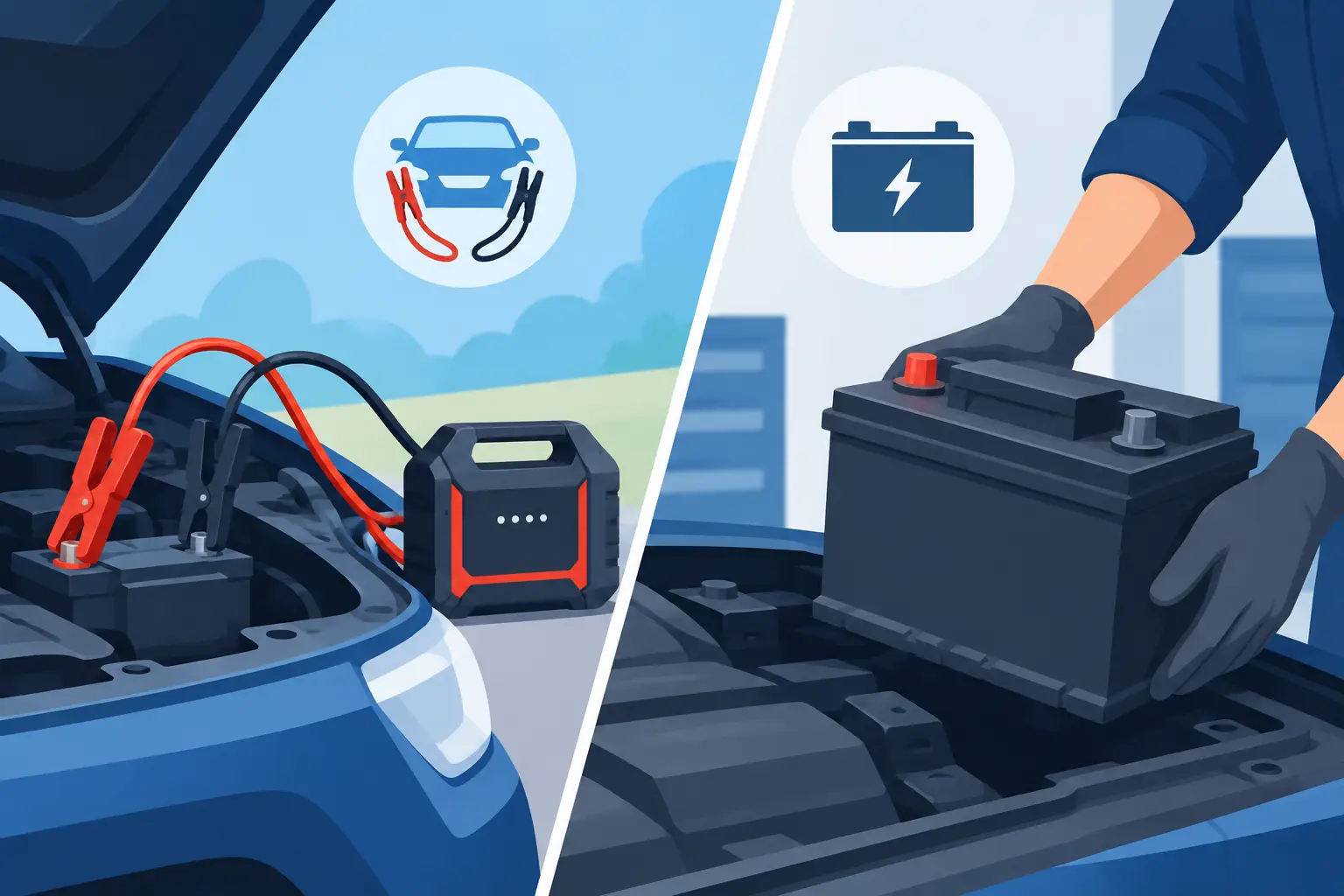
That click-click-click in a parking lot is never part of the plan. You have work, school pickup, a late shift, or a drive home ahead of you. The real question is jumpstart versus battery replacement: can a quick boost get you moving, or is your battery finished? Knowing the difference can save you from getting stranded again an hour, a day, or a week later.
A jumpstart is often the fastest answer when a healthy battery has simply lost its charge. But it is not a cure for an old, damaged, or failing battery. Here is how to tell which situation you are dealing with and what to do next.
Why a Battery Dies in the First Place
A car battery does more than start the engine. It supplies the initial power needed to crank the engine, then works with the charging system to support the vehicle’s electrical needs. If the battery is weak, the starter may not get enough power to turn the engine over.
Sometimes the cause is simple. A dome light, headlights, phone charger, or other accessory may have stayed on while the vehicle was parked. Cold Utah mornings can also expose a battery that was already losing strength. In those cases, a jumpstart may be all you need.
Other times, the battery is not holding a charge because it is worn out, internally damaged, corroded, or nearing the end of its service life. Most vehicle batteries last roughly three to five years, though driving habits, weather, and vehicle demands can shorten that window. Short trips are especially tough on a battery because the alternator may not have enough time to fully recharge it after each start.
When a Jumpstart Is the Right Move
A jumpstart is a practical first step when there is a clear reason the battery drained and the battery was working normally before that. Maybe you left an interior light on overnight. Maybe your car sat unused for a couple of weeks. Maybe the temperature dropped hard, and the engine is turning over slowly for the first time this season.
After a successful jumpstart, let the vehicle run and drive it for a while. A short lap around the block may not replenish much power. A normal drive gives the charging system time to put energy back into the battery.
Pay attention to what happens next. If the vehicle starts normally later that day and again the next morning, the issue may have been a one-time discharge. If it needs another jump soon after, do not keep treating it like a minor inconvenience. Repeated jumpstarts are your vehicle telling you something is wrong.
A roadside technician can jumpstart the vehicle safely and look for obvious trouble, such as loose battery connections or heavy corrosion around the terminals. That is a lot better than guessing with old jumper cables in a dark parking lot, especially when traffic, bad weather, or a busy schedule is already working against you.
Jumpstart Versus Battery Replacement: Warning Signs Matter
The biggest difference between a battery that needs a boost and one that needs replacement is consistency. A drained but healthy battery should recover once it is charged. A failing battery keeps creating the same problem.
Battery replacement is more likely when you notice slow cranking over several days, dim headlights while idling, flickering electrical accessories, or a battery warning light on the dash. You may also notice that power locks, windows, or the radio act strangely before the car refuses to start.
Age matters too. If your battery is four or five years old and has started needing jumps, replacement is usually the smarter and less frustrating choice. Waiting until it fails completely can leave you stuck at the grocery store, outside work, or in your own driveway when you need to be somewhere.
Look under the hood only if it is safe to do so. A swollen battery case, a rotten-egg smell, leaking fluid, or severe corrosion are not signs to ignore. Do not attempt to jumpstart a battery that is cracked, leaking, badly swollen, or frozen. Call for professional roadside help instead. Battery damage can create safety risks, and forcing the issue can damage the vehicle’s electrical system.
A Dead Battery May Not Be the Battery
This is where a little caution pays off. If a new battery keeps dying, the battery itself may not be the root problem. Your alternator may not be charging correctly, a loose or corroded cable may be interrupting power, or an electrical draw may be draining the battery while the car is off.
An alternator problem can look like a battery problem at first. You may get a jumpstart, drive away, and then the vehicle loses power again because the alternator is not replenishing the battery. A dashboard battery light, dimming headlights while driving, or electronics shutting down can point in that direction.
Replacing the battery without finding the underlying issue can get expensive fast. The new battery may drain too, and you will still be stranded. A jumpstart gets you out of the immediate bind, but a repair shop should inspect the charging system if the problem returns.
What to Do When Your Car Will Not Start
First, make sure the vehicle is in park or neutral and the parking brake is set. Turn off lights, climate controls, chargers, and other accessories. If the engine only clicks or turns over very slowly, a dead or weak battery is likely. If the engine cranks normally but will not start, the issue may be fuel, ignition, or something else entirely.
If you have a safe, reliable way to jumpstart the vehicle, follow your owner’s manual and use the correct connection points. Modern vehicles can have sensitive electronics, so incorrect cable placement is not a small mistake. Never connect cables if you see battery damage, smell strong sulfur odors, or are unsure what you are looking at.
When you are on a busy road, in a poorly lit area, or simply do not have time to gamble on a second failure, call for help. Munnster Towing provides 24/7 jumpstarts and roadside assistance for drivers across the Salt Lake Valley, with fast, affordable help when your vehicle decides it is done for the day.
Do Not Let a Jumpstart Become a Weekly Routine
A jumpstart is meant to get you moving, not become part of your morning routine. If you have needed more than one boost recently, schedule a battery and charging-system test as soon as you can. It is much easier to replace a weak battery on your terms than to deal with a no-start situation during a snowstorm, before work, or after a long shift.
You can reduce future trouble by keeping battery terminals clean, limiting accessory use when the engine is off, and driving the vehicle regularly enough to maintain a charge. If your car sits for long periods, a battery maintainer may help, but it will not revive a battery that is already failing.
The smart move is simple: use a jumpstart when the battery had a one-time drain, and choose replacement when the warning signs keep coming back. If you are stranded in Salt Lake City, West Jordan, West Valley, Draper, or nearby, get safe first, get help quickly, and let the next start be the last thing you have to worry about.
continue reading
Related Posts
Car overheating can turn a normal drive into engine damage fast. Learn what to do safely, what not to do, and when to call for a tow in Salt Lake Valley.
This Salt Lake towing case study shows how fast, affordable 24/7 roadside help gets a stranded commuter safely moving again without extra stress today.
See the benefits of local towing: faster arrival, clear communication, fair pricing, and capable roadside help when your vehicle stops in Salt Lake Valley