
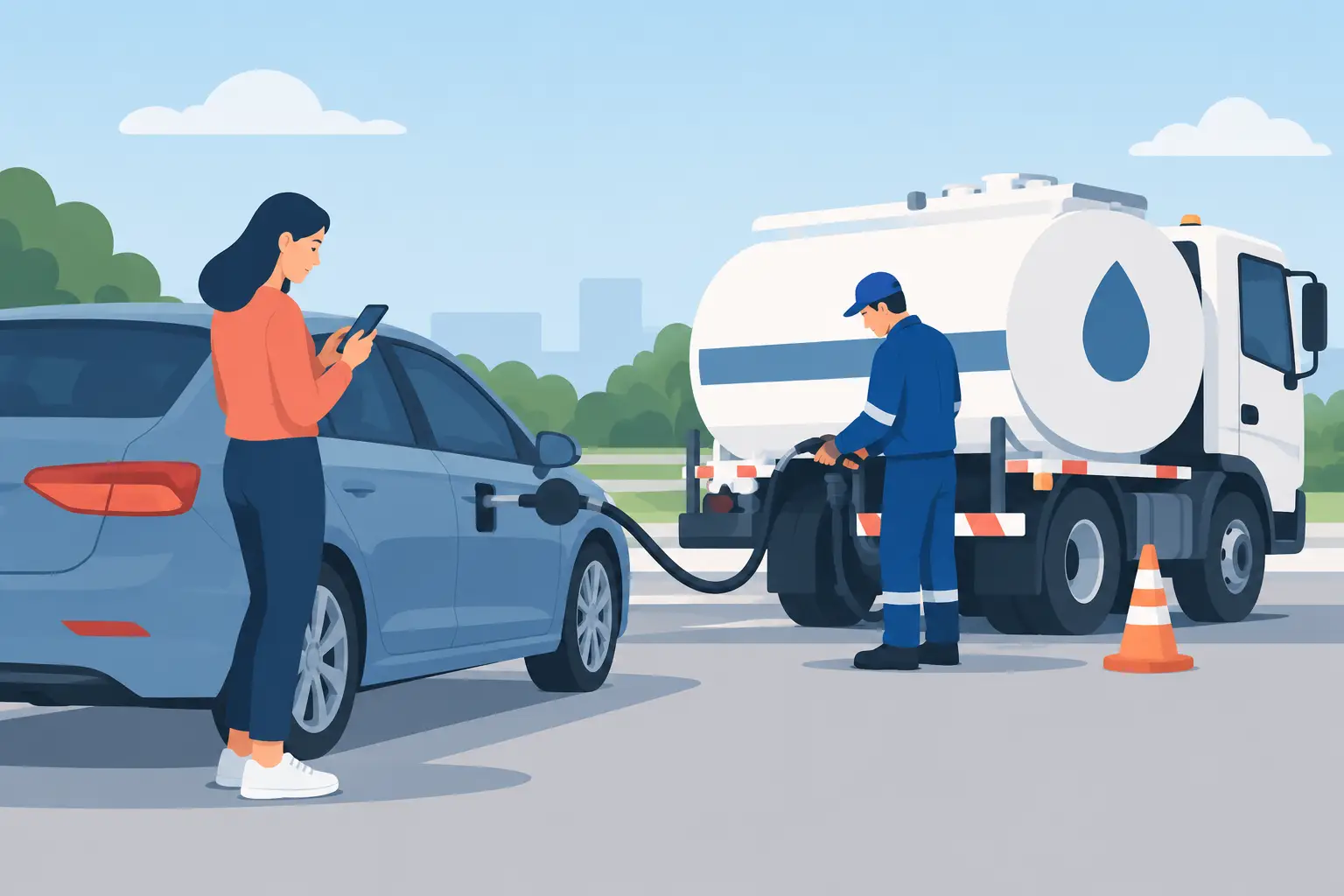
Running out of gas is never on the schedule. It happens on the way to work, during a late-night drive home, or with kids in the back seat when the nearest station is still miles away. Knowing how to request fuel delivery can turn a stressful roadside stop into a quick fix – as long as you make the call safely and give the dispatcher the information they need.
Fuel delivery is one of the simplest roadside services, but the details matter. Your location, fuel type, and vehicle access all affect how quickly help can reach you. Here is what to do when the gauge hits empty and the engine will not restart.
Get Your Vehicle to a Safe Spot First
If your car is still rolling when you realize you are out of fuel, do not slam on the brakes or try to push it farther than necessary. Signal, move toward the right shoulder, a parking lot, or another safe place out of active traffic. Turn on your hazard lights as soon as you are slowing down.
On a busy Salt Lake Valley road, freeway shoulder, or dark side street, your priority is staying visible and out of danger. If you can safely exit the vehicle, stand well away from traffic and behind a barrier when one is available. If traffic is moving fast or the shoulder is narrow, stay buckled inside with the doors locked unless emergency responders direct you otherwise.
Do not walk along a highway to find a gas station. A few dollars saved is not worth the risk. A fuel delivery service is built for exactly this problem.
How to Request Fuel Delivery: Have These Details Ready
The fastest way to request fuel delivery is to call a local 24/7 roadside assistance provider and be ready with clear, basic information. You do not need to know anything technical about your vehicle. You do need to help the dispatcher find you and bring the correct fuel.
Start with your exact location. An address is great, but roadside breakdowns rarely happen at a convenient address. Share the road name, closest cross street, highway direction, exit number, nearby business, landmark, or mile marker. Your phone’s map app can usually show coordinates or a dropped pin if you are unsure where you are.
Next, tell the dispatcher what kind of fuel your vehicle needs. Most passenger vehicles take regular unleaded gasoline, but do not guess. Check the label inside the fuel door if you can do it safely. Diesel, premium gasoline, flex fuel, and regular unleaded are not interchangeable. Giving the wrong fuel type can create a much bigger problem than an empty tank.
Also provide your vehicle’s year, make, model, and color. This helps the driver identify you quickly, especially in a crowded lot, along a freeway shoulder, or on a dark road. Let the dispatcher know if your vehicle is in a difficult spot, such as a parking garage, gated complex, construction area, or off-road location.
Finally, ask about the estimated arrival time, the amount of fuel being delivered, and the price. A reputable provider should be straightforward about what you can expect. The goal is no surprises, no mystery charges, and no waiting around wondering whether help is actually on the way.
What to Say When You Call
There is no need to overthink the call. A simple message gets the job moving:
“I am out of gas in a blue 2020 Honda Civic. I am on southbound I-15 near the 3300 South exit, on the right shoulder. The car needs regular unleaded fuel. My hazards are on, and I am safely inside the vehicle.”
That gives a roadside provider the essentials in one pass. If you are in a parking lot, use the business name and describe where you are parked. For example, mention the side of the building, the nearest entrance, or the row number if there is one.
If your phone battery is low, say so early in the call. Keep your phone available for return calls from dispatch or the driver, then reduce screen brightness and close unnecessary apps. A portable charger is useful, but it is not a substitute for sharing a clear location before your battery dies.
Stay Safe While You Wait for Fuel Delivery
Once help is dispatched, avoid turning the situation into a more expensive roadside call. Do not repeatedly crank the engine. If the tank is empty, starting attempts will not solve it and may drain an already weak battery.
Keep your hazard lights on if your vehicle is near traffic, but pay attention to the battery if you have been sitting for a long time. At night, interior lights and a phone flashlight can make you easier to see, but do not stand close to moving vehicles just to flag down help. The roadside technician will contact you or identify the vehicle from the details you provided.
Be careful with fuel containers, lighters, cigarettes, and open flames. Do not accept fuel from an unmarked container or attempt a risky transfer from another vehicle. Fuel spills are dangerous, and the wrong fuel can leave you needing a tow instead of a quick refill.
If you smell strong gasoline, see a leak, or notice smoke, move away from the vehicle if it is safe to do so and call emergency services. Fuel delivery is for an empty tank, not for a fuel-system leak or fire risk.
After the Fuel Arrives
The roadside technician will add enough fuel to get your engine running and help you get to a nearby station. Depending on the service and your vehicle, that may be a small emergency amount rather than a full tank. Treat it as a bridge to the pump, not an excuse to continue your whole trip.
After fuel is added, start the vehicle as directed. Some newer vehicles may need a moment before they restart after running completely dry. Once it starts, check your fuel gauge and head directly to a gas station. Avoid aggressive acceleration, and do not assume the gauge is perfectly accurate the second the engine comes back on.
If the vehicle still will not start, tell the technician. The issue may be more than an empty tank. A weak battery, fuel pump problem, or another mechanical issue can show up at the same time. This is where having an experienced roadside provider matters. They can help determine whether a jumpstart, diagnostic step, or tow is the sensible next move.
When Fuel Delivery Is Better Than Calling a Friend
Calling a friend with a gas can may sound easy, but it depends on where you are. In a safe residential area during daylight, it may be a reasonable option. On I-15, in bad weather, after midnight, or when you are stuck far from home, professional fuel delivery is usually the smarter call.
A roadside service provider knows how to approach traffic safely, carries approved fuel containers, and can handle the next problem if your vehicle does not restart. It also saves your friend from driving across town, buying a gas can, and trying to find you on a shoulder or unfamiliar road.
For drivers in Salt Lake City, West Valley, West Jordan, South Jordan, North Salt Lake, Holladay, Midvale, and Draper, local response makes a real difference. Munnster Towing provides 24/7 fuel delivery and roadside help for drivers who need to get moving without paying more than they should.
Avoid Another Empty-Tank Stop
Most fuel run-outs are not caused by carelessness. A long commute, a broken fuel gauge, unexpected traffic, cold weather, or simply a hectic day can catch anyone off guard. Still, a few habits can lower the odds.
Refill when you reach a quarter tank rather than waiting for the fuel light. Learn how many miles your vehicle typically has after the warning light comes on, but treat that number as an estimate, not a promise. Hills, stop-and-go traffic, towing, weather, and your vehicle’s condition can change fuel use quickly.
If your fuel gauge behaves strangely, have it checked. A gauge that sticks, drops suddenly, or reads full for too long can leave you stranded with no warning. Keep a phone charger in the car and save a dependable roadside assistance number before you need it.
The next time your vehicle sputters and the fuel light has been glaring at you for miles, focus on getting safe, sharing your location, and requesting help early. Fast fuel delivery gets you back on the road. Making the call before you are in a dangerous spot makes the whole situation easier.
continue reading
Related Posts
Does insurance cover towing? See which policies may pay, what limits apply, and what to check before a breakdown leaves you stranded on the road at night.
Use this Salt Lake Valley towing guide to handle breakdowns, lockouts, accidents, and recovery calls with clear steps for getting help fast and fairly now.
Compare the best towing options Salt Lake drivers need for breakdowns, crashes, lockouts, and more - with fast 24/7 help when a vehicle will not move.