
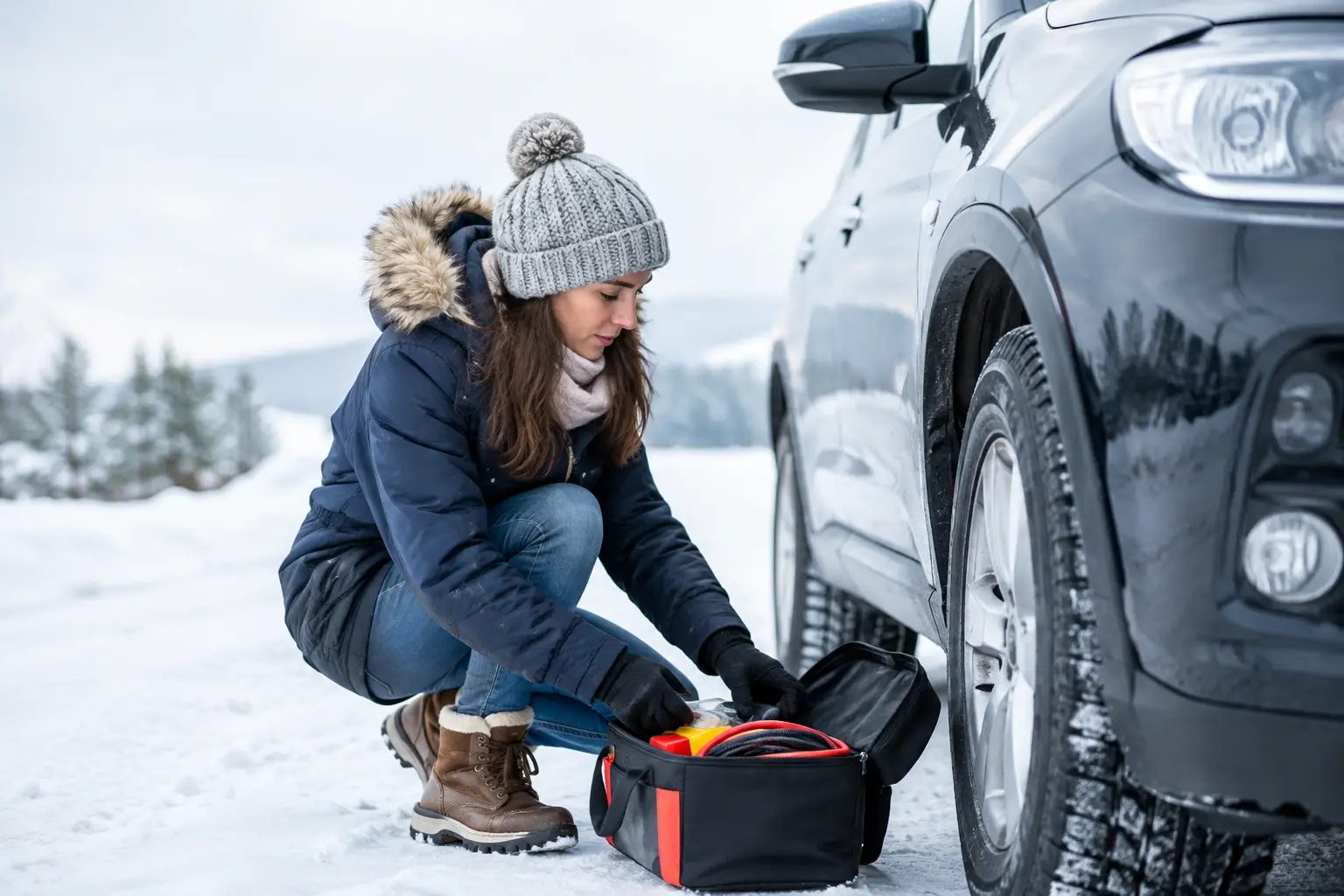
A winter breakdown can turn from inconvenient to dangerous fast. One minute you are driving home from work in West Valley City or heading across Salt Lake Valley, and the next you are on the shoulder with a weak battery, a flat tire, or an engine that will not start. Knowing how to prepare for a winter breakdown gives you more time, more options, and a safer plan when the temperature drops.
Winter driving in Utah is not only about big snowstorms. Black ice, freezing rain, cold overnight temperatures, slush, and low visibility can all put extra strain on your vehicle. A little preparation before the weather gets rough beats trying to solve a problem from the side of a busy road.
How to Prepare for a Winter Breakdown Before You Drive
Your best roadside emergency plan starts in your driveway. Cold weather exposes weak batteries, low tire tread, aging belts, and neglected fluids. If your car has been making a strange noise, struggling to start, or showing a warning light, do not assume it will sort itself out once winter arrives.
Start with your battery. A battery that works fine in mild weather can fail during a cold morning because low temperatures reduce its available power. If the engine cranks slowly, the headlights dim at idle, or the battery is several years old, have it tested before you get stranded. Keep jumper cables or a portable jump pack in the vehicle, but remember that a jump-start may only be a temporary fix if the battery or charging system has failed.
Check your tires next. Good tread is what helps your vehicle grip wet pavement, packed snow, and slush. Look for uneven wear, cracks, bulges, or nails, and check tire pressure when the tires are cold. Pressure drops as temperatures fall, so the tires that looked fine in October may be underinflated by December. Follow the pressure listed on the driver’s door sticker, not the maximum number printed on the tire sidewall.
Your fluids deserve the same attention. Confirm that your coolant provides proper freeze protection, your windshield washer fluid is rated for freezing temperatures, and your oil level is where it should be. Use winter washer fluid, not plain water. A dirty windshield combined with low sun glare can make it tough to see a stopped vehicle, a curve, or a patch of ice until it is too late.
Finally, make sure your wipers clear the glass without streaking and that all exterior lights work. Headlights, brake lights, turn signals, and hazards matter even more when snow is coming down sideways or daylight disappears before your commute ends.
Pack a Winter Car Emergency Kit That Actually Helps
A winter emergency kit should be practical, compact, and easy to reach. It is not about stuffing the trunk with gear you will never use. It is about having the basics that keep you visible, warm, and able to wait safely if your vehicle cannot move.
Keep these items in a weatherproof tote or sturdy bag:
- A warm blanket, gloves, knit hat, and extra warm layers
- A flashlight with fresh batteries or a hand-crank light
- A phone charging cable and a portable battery pack
- Jumper cables or a charged jump starter
- An ice scraper, snow brush, small shovel, and traction material such as sand or cat litter
- Reflective triangles or road flares, plus a bright safety vest
- Bottled water and shelf-stable snacks
- Basic first-aid supplies, paper towels, and a small tool kit
If you drive with children, older family members, or pets, pack with them in mind. Extra blankets, water, needed medication, and pet supplies are not overkill when traffic is stopped or a tow takes longer because roads are slick.
Keep the kit inside the cabin if possible, especially your phone battery pack, water, and medications. Items left in a trunk are not much use if a damaged latch, deep snow, or a crash makes the trunk hard to access.
Plan for the Trips That Create the Most Risk
Not every winter drive carries the same level of risk. A five-minute trip through town is different from a late-night drive after a snowstorm, but even short trips can leave you stuck if your car will not restart in a parking lot. Check the forecast and road conditions before longer trips, then give yourself extra time. Rushing is how drivers brake too hard, follow too closely, or decide to push through conditions that are getting worse.
Do not let your fuel tank run close to empty in winter. A fuller tank gives you more margin if traffic stops, a detour adds miles, or you need to keep the vehicle running briefly for warmth. It can also help reduce moisture buildup in the fuel system. Half a tank is a smart refill point during the coldest part of the season.
Tell someone where you are going when traveling outside your normal routine, particularly at night or in poor weather. Charge your phone before leaving and save your roadside assistance provider’s number ahead of time. Searching for help with cold hands, a dead phone battery, and spotty service is a bad time to start comparing options.
What to Do When Your Vehicle Breaks Down in Winter
If your vehicle begins losing power, makes a loud mechanical sound, overheats, or shows a serious warning light, get off the road as safely as you can. Signal early, slow down gradually, and aim for a parking lot, wide shoulder, or other safe area away from moving traffic. Do not stop around a blind curve, at the bottom of a hill, or where other drivers will have limited time to react.
Turn on your hazard lights right away. If it is dark or visibility is poor, use reflective triangles or flares only when you can place them without stepping into traffic. Stay alert around passing vehicles. Ice can cause drivers to slide farther than expected, even if they appear to be slowing down.
Once you are in a reasonably safe location, stay in the vehicle with the doors locked unless there is an immediate threat, such as fire, smoke, or a dangerous collision location. Your car offers shelter and is easier for a tow truck driver, law enforcement, and other responders to spot than a person walking along a snowy roadside.
Call for help and give clear details: your location, the nearest cross street or landmark, vehicle make and color, the problem you are having, and whether you are in a safe place. If you are on a highway, note the direction of travel and the closest exit or mile marker. Clear information helps dispatch send the right assistance without wasting time.
If you need to run the engine for heat, first make sure the exhaust pipe is not blocked by snow. Carbon monoxide can build up quickly in an enclosed vehicle. Run the engine only in short intervals, crack a window slightly for ventilation, and do not fall asleep while it is running. If you can stay warm under layers and blankets without the engine on, that is usually the safer choice.
Avoid These Common Winter Roadside Mistakes
Trying to force your way out of snow is a common problem. Spinning the tires can dig the vehicle in deeper, damage tires, and create a tougher recovery. Clear snow from around the drive wheels, use traction material, and try gentle acceleration. If the vehicle is badly stuck, close to a ditch, or on an icy incline, stop before turning a simple problem into a recovery job.
Avoid opening a hot radiator cap, especially after an overheating warning. Pressurized coolant can cause serious burns. Also, never rely on a tow strap unless you know both vehicles have proper recovery points and the conditions are safe. Improvised pulls on icy streets can damage vehicles or injure people fast.
Do not accept help from a stranger if their approach makes you uncomfortable. You can speak through a barely opened window, ask them to call for assistance, or wait in your locked vehicle for the tow truck you requested. Being stranded is stressful, but you still get to make careful decisions.
Get Help Before the Cold Becomes the Bigger Problem
Winter car trouble does not always wait for daylight or a convenient parking lot. If you are dealing with a dead battery, flat tire, lockout, empty fuel tank, accident, or vehicle that will not move, call Munnster Towing for fast, affordable 24/7 roadside help and towing across Salt Lake Valley. Keep warm, stay visible, and let a trained local crew handle the roadside part safely.
continue reading
Related Posts
Learn how to identify battery failure before a no-start turns into a roadside problem. Spot warning signs, test safely, and know when to call for help.
Need overnight tow truck availability in Salt Lake Valley? Get fast, affordable help for breakdowns, lockouts, dead batteries, accidents, and more tonight.
Need Salt Lake City towing now? Get fast, affordable 24/7 help for breakdowns, flat tires, dead batteries, lockouts, accidents, and local vehicle transport.