
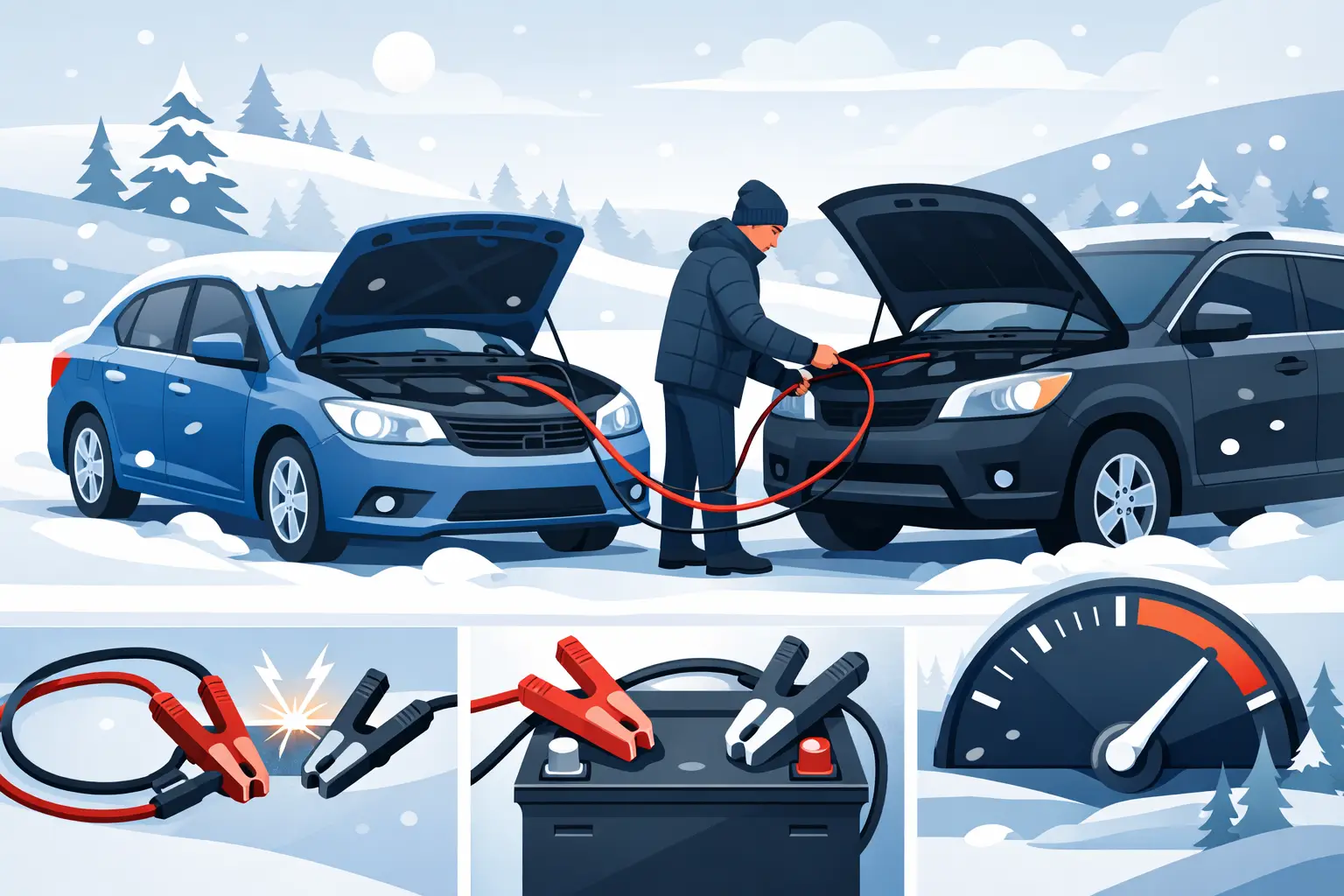
A dead battery in cold weather rarely happens at a convenient time. It happens when you are late for work in West Jordan, leaving a late shift in Salt Lake, picking up kids in Taylorsville, or parked outside in Draper with snow on the windshield. You turn the key or press the start button, hear a weak click, and suddenly your whole day is on hold.
Cold weather is hard on cars, especially batteries that were already getting weak. The good news is that a no-start situation does not always mean you need a new battery. The bad news is that repeated jumpstarts and guesswork can leave you stranded again a few hours later. Here is how to handle the problem safely and get moving without wasting time.
Why a Dead Battery in Cold Weather Is So Common
A car battery creates power through a chemical reaction. When temperatures drop, that reaction slows down. At the same time, your engine needs more power to start because cold oil is thicker and the engine has to work harder to turn over.
That double hit is why a battery that seemed fine in October can fail on the first seriously cold morning. A fully charged battery can lose a major portion of its available cranking power in freezing temperatures. If the battery is older, partly discharged, corroded, or damaged, winter may be the moment it finally gives up.
Short trips make the problem worse. Starting your vehicle takes a lot of power, and a five-minute drive may not give the alternator enough time to recharge the battery. Add headlights, cabin heat, rear defrost, heated seats, phone charging, and a morning commute, and your battery may never fully recover.
Signs It Is the Battery and Not Something Else
The classic sign is a slow crank. Your engine sounds like it wants to start but turns over slowly, then stops. You might also hear one click or a rapid clicking sound when you try to start the vehicle.
Dim headlights, a weak interior dome light, a dashboard that flickers, or electronics that reset can also point to low battery power. If the car starts with a jump but dies shortly after the jumper cables are removed, there may be more going on than a drained battery. The battery could be failing, the alternator may not be charging correctly, or there could be a loose connection.
If the engine cranks normally but will not start, the battery may not be the issue. Fuel, ignition, sensor, or mechanical problems can cause a no-start too. That is where a fast roadside assessment can save you from throwing money at the wrong repair.
What to Do When Your Car Will Not Start
First, do not keep trying the ignition over and over. Every attempt drains what little power remains. Turn off the radio, heater fan, headlights, chargers, and other accessories. Make sure the vehicle is in Park or Neutral, set the parking brake, and try one more time.
If you have jumper cables and a working vehicle nearby, a jumpstart may get you going. But do not rush into it on a busy road, in a tight parking lot, or during bad weather. Cars need to be positioned safely without touching each other, and cables must be attached in the correct order. One wrong connection can damage electronics or create sparks around a battery.
Portable jump packs can be useful, but they need to be charged before you need them. A jump pack tossed in the trunk six months ago is not much help when it is dead too.
If you are unsure how to jump your vehicle, you smell sulfur or rotten eggs near the battery, see a swollen battery case, notice leaking fluid, or are stuck in an unsafe location, skip the DIY attempt. Call for roadside assistance. Getting a professional jumpstart is quicker and safer than guessing in a freezing parking lot.
How to Jumpstart Safely When Conditions Allow
If you decide conditions are safe and you know your vehicle has a standard 12-volt battery system, follow the instructions in your owner’s manual first. Vehicle manufacturers sometimes have specific jump points, especially on newer vehicles and hybrids.
Keep open flames and cigarettes away from both vehicles. Inspect the battery before connecting anything. If it is cracked, leaking, frozen, or badly swollen, do not attempt a jumpstart. A damaged battery needs professional attention.
Connect the positive cable to the positive terminal on the dead battery, then to the positive terminal on the good battery. Connect the negative cable to the good battery’s negative terminal. The final negative connection should go to an unpainted metal ground point on the disabled vehicle, away from the battery if possible. Start the working vehicle, wait a few minutes, and then try starting the disabled vehicle.
Once it starts, remove the cables in reverse order. Do not let the clamps touch each other while they are connected. Then keep the vehicle running and drive it long enough to allow some charging time. A quick lap around the block is not enough. Still, remember that driving after a jump is not a guaranteed fix. If the battery is old or the charging system has a problem, the car can fail again.
When a Jumpstart Is Not the Right Answer
A jumpstart is a temporary solution when lights were left on, a door was not fully closed, or the battery was drained by cold weather. It is not a cure for a battery that cannot hold a charge.
If your car needs multiple jumps in a week, get the battery and charging system tested. If the battery is more than three to five years old, replacement may be the smart move, especially before a Utah cold snap. Battery life depends on usage, heat exposure, driving habits, and the vehicle itself, so age alone does not tell the whole story. But an older battery that is struggling in winter is not likely to become more reliable.
You should also avoid jumping a vehicle if you have a hybrid, electric vehicle, or a model with hard-to-reach battery terminals and you are not familiar with the correct procedure. These systems can have special requirements. A professional roadside technician can help you avoid expensive mistakes.
Prevent Another Cold-Weather Battery Failure
The easiest prevention is to have the battery tested before it becomes an emergency. Many weak batteries look fine until temperatures fall. A load test can show whether it still has enough starting power for winter.
Keep battery terminals clean and secure. White or blue-green buildup around the terminals can interfere with the electrical connection. If you see corrosion, have it cleaned properly and make sure the cables are tight. A loose terminal can act exactly like a failing battery.
Try to combine short trips when possible, especially during the coldest weeks. Longer drives give the alternator more time to recharge the battery after starting. If you will not drive your vehicle for several days, a battery maintainer may help keep it charged. That is particularly useful for a second vehicle, seasonal car, or vehicle parked outside.
Finally, do not ignore warning signs. Slow starts, flickering lights, and frequent electronic glitches are your car giving you a heads-up. Taking care of them before a storm is cheaper than being stuck in a dark parking lot at 6 a.m.
Fast Help for a Dead Battery in Salt Lake Valley
When you are stranded, you do not need a lecture about batteries. You need help that shows up, gets the vehicle started when possible, and tells you plainly if a tow or repair is the better next step. Munnster Towing provides 24/7 roadside assistance and jumpstart service for drivers across the Salt Lake Valley, including Salt Lake City, West Valley, West Jordan, Taylorsville, and Draper.
If your battery is dead at home, work, a grocery store, or on the side of the road, get to a safe location if you can. Turn on your hazard lights, stay clear of traffic, and have your location, vehicle make, model, and symptoms ready when requesting help. That gives the dispatcher what they need to send the right assistance fast.
Cold mornings are hard enough. Do not let a weak battery turn one bad start into an all-day problem. Get the vehicle checked, keep an eye on the warning signs, and call for fast roadside help when the key turns but the engine will not.
continue reading
Related Posts
Learn how to identify battery failure before a no-start turns into a roadside problem. Spot warning signs, test safely, and know when to call for help.
Need overnight tow truck availability in Salt Lake Valley? Get fast, affordable help for breakdowns, lockouts, dead batteries, accidents, and more tonight.
Learn how to prepare for a winter breakdown in Salt Lake Valley: check your car, pack supplies, and stay safe while roadside help is on the way all winter.