
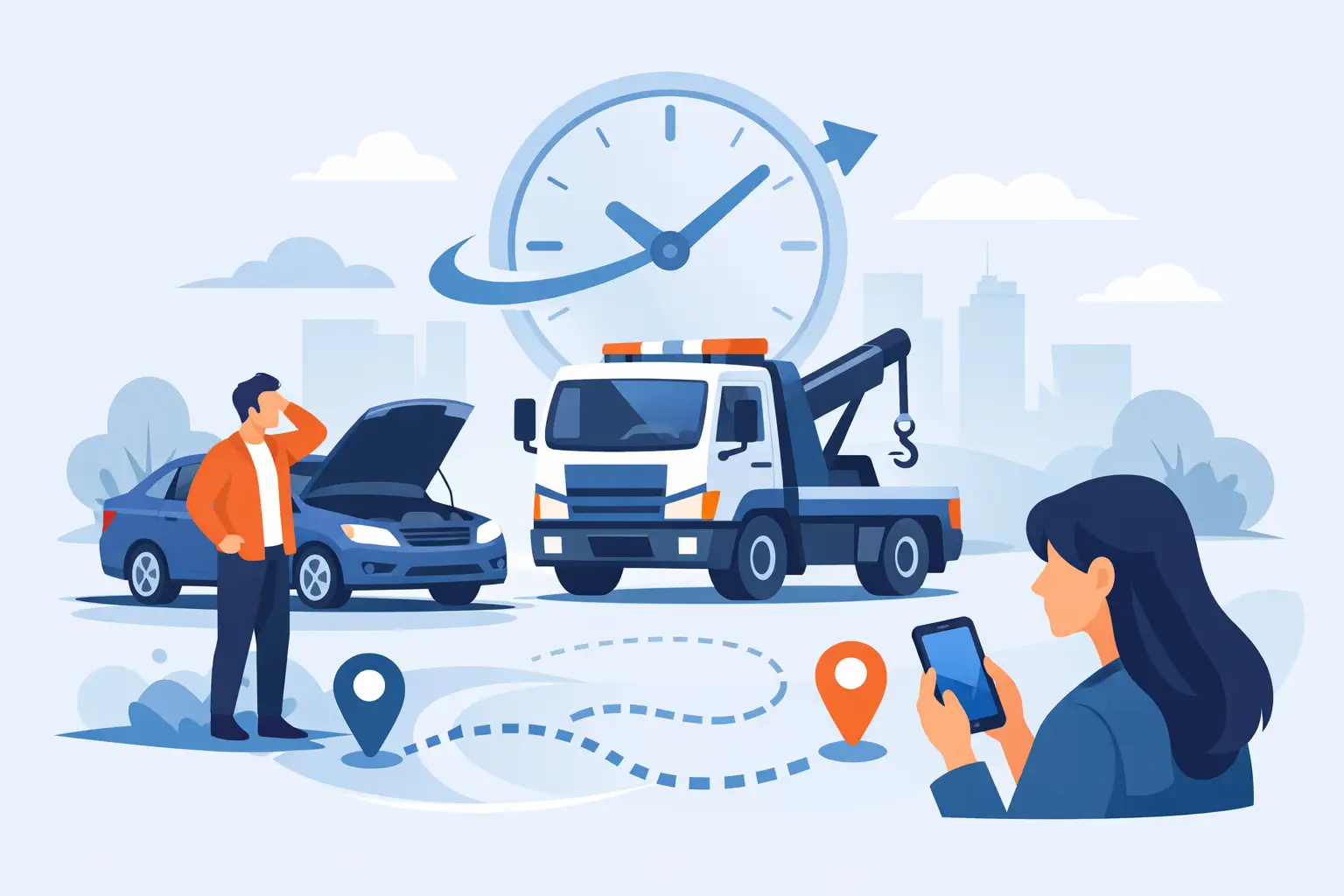
A dead battery outside a West Jordan grocery store, a flat tire on I-15, or a lockout in a Draper parking lot can make five minutes feel like an hour. Realistic tow truck arrival time expectations help take some of the uncertainty out of a stressful moment. Most local roadside calls are handled as quickly as dispatch can safely get a truck to you, but the actual wait depends on where you are, what is happening on the road, and what kind of help your vehicle needs.
When you call for a tow, jumpstart, tire change, fuel delivery, lockout, or recovery, the goal is simple: get you safe and moving without making you wait longer than necessary. Here is what affects the clock and what you can do to help your tow truck reach you faster.
What Is a Normal Tow Truck Arrival Time?
For many roadside assistance calls in the Salt Lake Valley, a local tow truck may arrive in roughly 30 to 60 minutes. That is a reasonable starting point, not a promise carved in stone. A truck already near your location with a straightforward jumpstart request may get there sooner. A call during a snowstorm, rush hour, or a major crash response may take longer.
The best towing companies give you a realistic estimated arrival time when you call. If conditions change, a good dispatcher should keep you updated instead of leaving you guessing in a parking lot with a dead phone battery and no clue where help is.
It also matters whether you need roadside service or a full tow. A technician can often handle a jumpstart, lockout, flat tire, or fuel delivery quickly once they arrive. Accident recovery, off-road recovery, and vehicles that cannot roll or steer safely can require specialized equipment, extra planning, or a second truck.
The Biggest Factors Behind Tow Truck Arrival Time Expectations
Your exact location
Location is usually the biggest factor. A vehicle stranded on a major route near Salt Lake City, West Valley, Taylorsville, or West Jordan may be easier to reach than one on a remote road, a canyon route, or an off-road trail. Apartment complexes, large shopping centers, underground garages, and construction areas can also slow down the final few minutes if the driver cannot easily find you.
Give dispatch the street address when possible, plus nearby cross streets, landmarks, building names, or parking-lot details. If you are on a highway, tell them the direction of travel, nearest exit, mile marker, and which shoulder you are on. “I am by the big store” is not enough when every minute counts.
Traffic, road closures, and local events
Tow trucks deal with the same Salt Lake Valley traffic everyone else does. Morning and evening commutes, road construction, lane closures, downtown events, and congestion around major interchanges can add time even when the truck is only a few miles away.
A nearby truck is not always the fastest truck if it is trapped on the wrong side of a backed-up freeway. Dispatchers balance truck availability, traffic conditions, equipment needs, and the urgency of each call to send the right driver, not just the closest dot on a map.
Weather and road conditions
Utah weather can change the situation fast. Heavy snow, ice, strong wind, flooding, or low visibility can increase demand for towing and roadside assistance across the valley at the same time. More drivers slide off the road, batteries fail in the cold, and tires go flat after a rough commute.
During severe weather, waiting a little longer can be frustrating, but safe driving matters. A tow truck racing through icy conditions is not a solution. Expect dispatch to prioritize dangerous locations, crashes, and drivers exposed to immediate risk while still working to get help to every caller.
The type of service you need
Not every request requires the same truck or technician. A simple lockout may be handled by an available roadside unit, while a disabled SUV needing a flatbed tow requires the correct equipment. An accident scene may need careful loading, traffic awareness, and coordination with law enforcement. A vehicle stuck in mud, snow, or a ditch may require recovery gear and a technician who can assess the scene without causing more damage.
Be clear about your vehicle and the problem. Tell dispatch if the car is all-wheel drive, electric, lowered, heavily damaged, blocked in, stuck off-road, or carrying passengers who need special assistance. That information helps prevent the wrong truck from arriving and turning one wait into two.
Call volume and emergency priority
Towing is a 24/7 service, but demand is not evenly spread across the day. Calls spike during winter storms, holiday weekends, late-night breakdowns, major accidents, and extreme heat or cold. A towing company may also prioritize a vehicle stopped in an active traffic lane or a driver in an unsafe area over a lockout in a secure driveway.
That is not a brush-off. It is practical emergency dispatch. If your situation becomes unsafe while you are waiting, tell the dispatcher immediately. A changed situation can change how the call is prioritized.
How to Get Help Faster When You Call
The quickest calls start with accurate information. Before calling, if it is safe to do so, check your location and take a quick look at the vehicle. You do not need to diagnose the mechanical problem. You just need to describe what happened clearly.
Tell the dispatcher your name, callback number, exact location, vehicle make, model, color, and license plate if available. Explain whether the vehicle is blocking traffic, on a shoulder, in a garage, or parked somewhere accessible. Mention the service you need and whether the vehicle can roll, steer, and shift into neutral.
Keep your phone on and answer calls from unfamiliar local numbers. A driver may call for a gate code, a clearer location, or directions through a crowded lot. If you move to a safer nearby spot, notify dispatch right away. Do not make the driver hunt for a vehicle that is no longer where you said it would be.
Munnster Towing keeps the process direct: explain where you are, explain what is wrong, and request the help you need. Clear information gives dispatch the best chance to send the right truck without delay.
What to Do While You Wait for the Tow Truck
Your first job is staying safe, not trying to fix everything on the roadside. If your vehicle is in a dangerous traffic position and can be moved safely, get it out of the travel lane. Turn on hazard lights. If you have reflective triangles or flares and conditions allow, use them carefully.
On a busy highway, stay well away from moving traffic. If remaining inside the vehicle is safest, keep seat belts on and doors locked. If you must exit, do so only when it is safe and move away from the roadway. Never stand between your vehicle and traffic, and do not wait directly behind or in front of the vehicle where another driver could hit you.
In a parking lot or residential area, wait in a visible, secure location near the vehicle if possible. Keep children and pets safe, especially in extreme temperatures. If your battery is dead, save your phone power by lowering screen brightness and avoiding unnecessary apps. A portable charger is one of those small things that feels unimportant until the night your car will not start.
Do not accept help from strangers if the situation feels off. It is fine to be courteous, but you are not required to unlock your vehicle, hand over keys, or share personal details with anyone except the verified roadside professional you called.
When a Longer Wait Means You Should Call Back
An estimated arrival time is useful, but it is not a reason to sit silently if circumstances change. Call back if you are in a new location, your vehicle has become a traffic hazard, the weather has worsened, your phone is about to die, or you have not received an update after the quoted window has passed.
Also call if you realize the service request needs to change. Maybe you originally requested a jumpstart, but the vehicle started and then stalled. Maybe a flat tire is accompanied by wheel damage. Maybe the car cannot be put in neutral after all. A quick update lets dispatch prepare the correct response before the truck arrives.
Fast Help Starts With a Clear Call
Nobody plans a breakdown between errands, after a long shift, or halfway through a family trip. But knowing what affects tow truck arrival time expectations can make the wait less frustrating and help you give dispatch the details that matter. Get to a safe spot, provide an exact location, keep your phone nearby, and ask for an honest estimated arrival time. Then let a qualified local towing professional handle the hard part and get you back on track.
continue reading
Related Posts
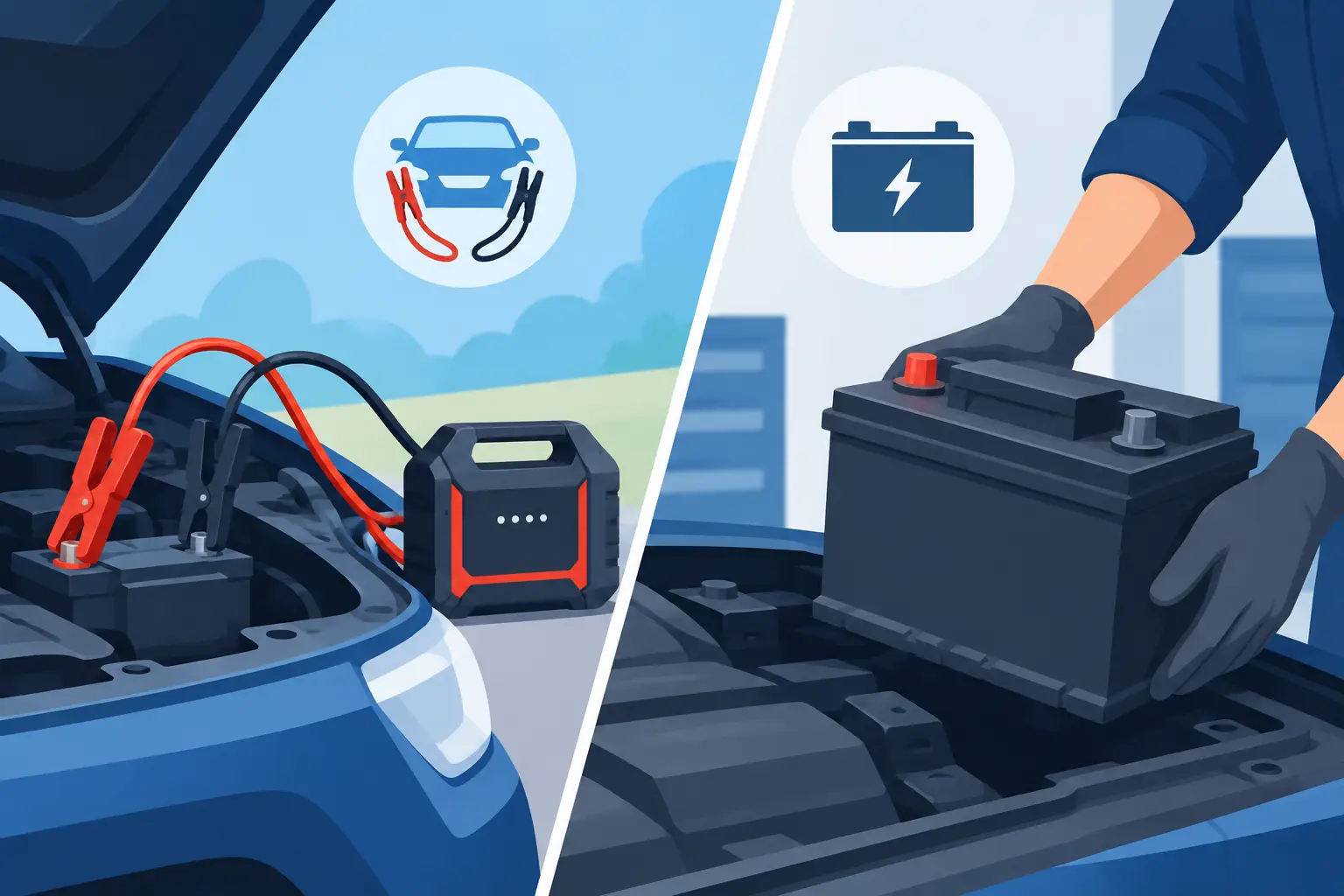
Dead battery? Compare jumpstart versus battery replacement, spot failure signs, and know when to call for quick, affordable roadside help in Utah today.
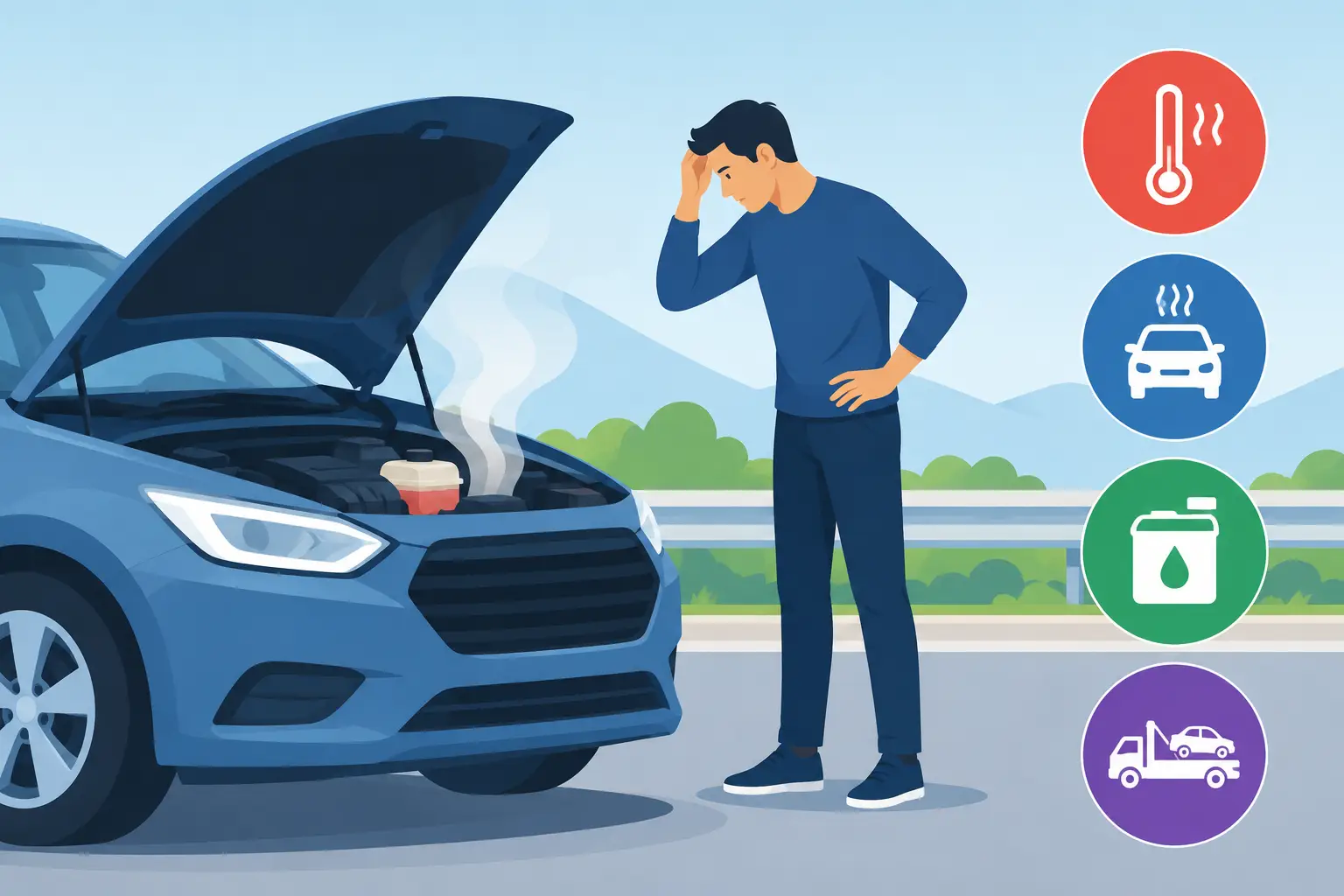
Car overheating can turn a normal drive into engine damage fast. Learn what to do safely, what not to do, and when to call for a tow in Salt Lake Valley.
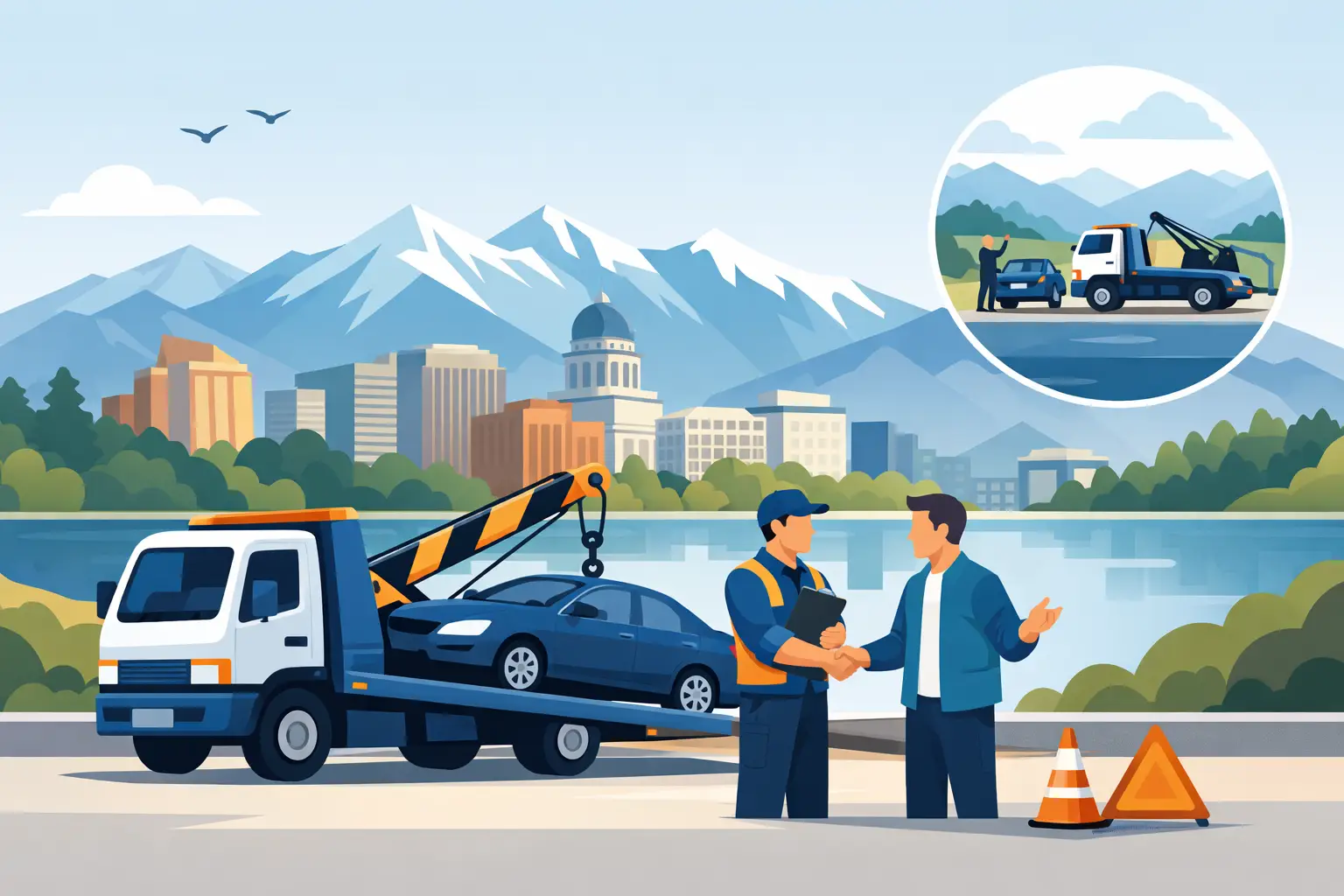
This Salt Lake towing case study shows how fast, affordable 24/7 roadside help gets a stranded commuter safely moving again without extra stress today.