
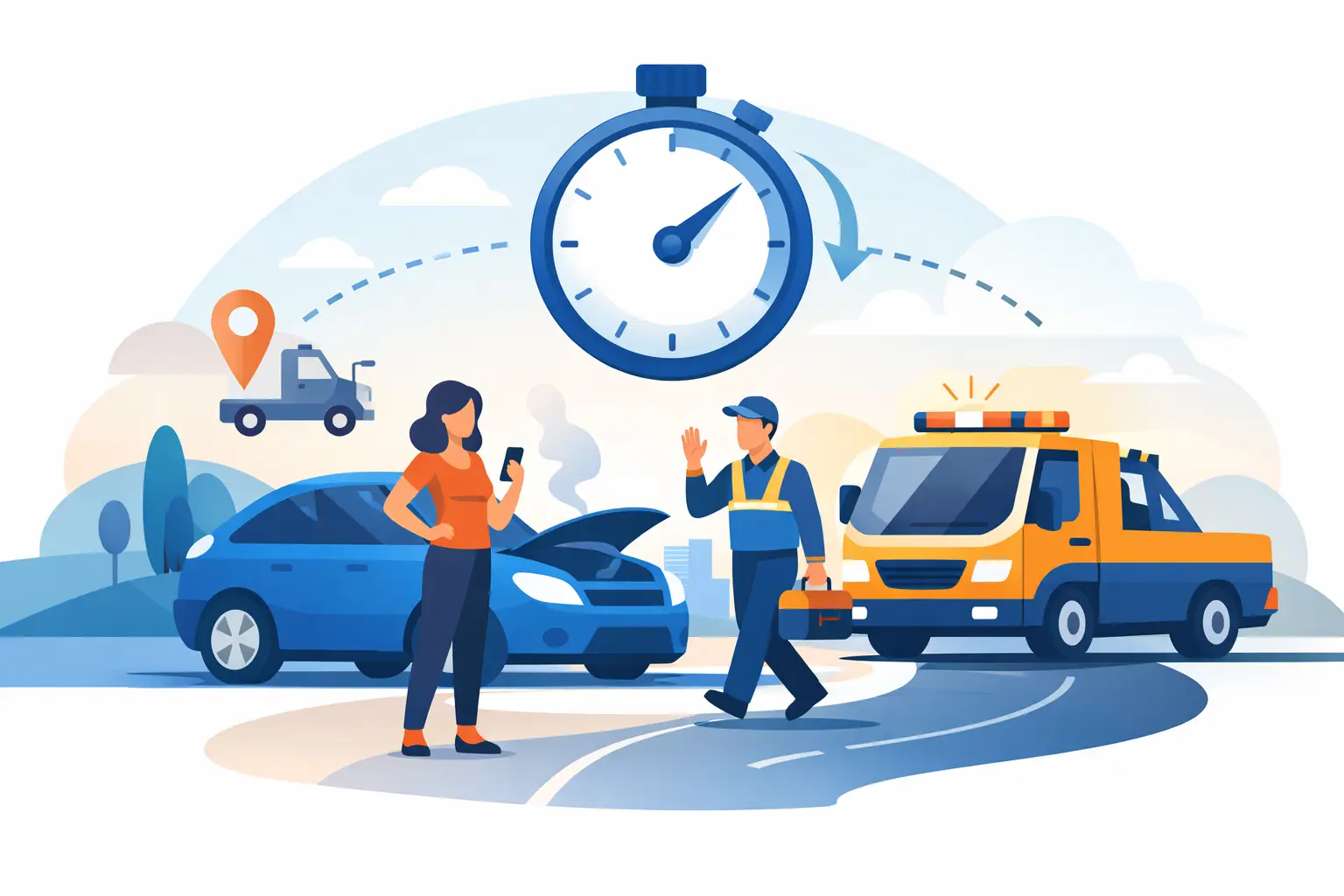
A dead battery in a grocery store lot is annoying. The same dead battery on I-15 before a night shift is a real problem. Roadside assistance response time matters because every extra minute can mean missed work, worried family members, unsafe roadside conditions, or a ride that never reaches its destination.
When you need help, you do not need a speech about car care. You need someone to answer, dispatch the right truck, and get there ready to solve the problem. That is what fast, local roadside service is supposed to do.
What Is a Normal Roadside Assistance Response Time?
There is no honest one-size-fits-all answer. Response time depends on where you are, what is happening on the road, the type of service you need, traffic, weather, and how many emergency calls are already in progress.
For routine roadside calls in the Salt Lake Valley, a nearby provider may often be able to arrive within 30 to 60 minutes. In lighter traffic or when a truck is already close to your location, help can arrive sooner. During a snowstorm, rush hour, major accident, or late-night surge, the wait may be longer.
Be cautious of companies that promise an exact arrival time before they know your location and vehicle problem. A reliable dispatcher should give you a realistic estimate, update you if conditions change, and send the appropriate technician instead of simply telling you what sounds good.
Why Roadside Assistance Response Time Changes
A tow truck is not sitting around the corner from every stranded driver. Good dispatching makes a big difference, but real conditions still matter.
Your Exact Location
A car stalled near downtown Salt Lake City, West Valley, West Jordan, Taylorsville, or Draper is usually easier to reach than a vehicle on a remote canyon road or off a poorly maintained trail. Clear location details help dispatch choose the closest available truck and avoid wasting time trying to find you.
Do not say only that you are “on the freeway.” Give the freeway direction, nearest exit, mile marker if available, and whether you are on the shoulder, an on-ramp, or an off-ramp. In a parking lot, name the business and describe where you are parked. Those details can cut down on confusion when minutes count.
The Type of Help You Need
A simple jumpstart, fuel delivery, tire change, or lockout service may require a different truck setup than a crash recovery or a vehicle stuck off-road. If your car is in a ditch, has suspension damage, or cannot safely roll, the dispatcher may need to send recovery equipment rather than a standard roadside unit.
That can add time, but it is the right call. Sending the wrong truck fast and then waiting for a second truck is not fast service. It is a longer, more expensive headache.
Traffic, Weather, and Active Emergencies
Salt Lake Valley traffic can get heavy quickly, especially during commute hours and around major events. Winter weather adds another layer. Snow, black ice, and low visibility slow every vehicle on the road, including tow trucks.
At the same time, a severe storm creates more battery calls, slide-offs, collisions, and vehicles stuck in snow. A professional company still dispatches efficiently, but high call volume can affect arrival estimates. Safety comes first when crews are working around crashes, blocked lanes, or dangerous road conditions.
The Information You Give at Dispatch
The fastest calls start with accurate information. Tell the dispatcher your vehicle make, model, color, location, problem, and whether the vehicle is safely accessible. Mention anything unusual right away, such as a low-clearance garage, a locked steering wheel, an electric vehicle, a trailer, an all-wheel-drive vehicle, or damage from an accident.
A few clear answers up front help prevent delays after the truck arrives. Nobody wants a technician to show up only to discover that the vehicle needs equipment that was not requested.
How to Get Faster Roadside Help
You cannot control a snowstorm or freeway traffic. You can make it easier for the right technician to find you and get to work immediately.
First, move to a safe spot if the vehicle can be moved without creating more risk. Get out of moving traffic, pull into a parking lot when possible, and turn on your hazard lights. If you are on a highway shoulder, stay well away from traffic and follow any instructions from law enforcement or emergency personnel.
Next, have your phone charged and keep it close. A dispatcher or driver may call to confirm your location, ask about a gate code, or let you know they have arrived. If your phone is nearly dead, say so during the call. That lets the provider communicate clearly and reduces the chance of a missed connection.
Finally, be ready to identify your vehicle. Turn on an interior light at night if it is safe to do so, and watch for the service truck. In a crowded lot, a quick description such as “near the garden center entrance” or “two rows behind the gas pumps” can save time.
Fast Does Not Mean Careless
When you are stranded, it is natural to want the first truck there immediately. But response time is only one part of good roadside service. The technician also needs to protect your vehicle, assess the situation, and use the right equipment.
For example, an all-wheel-drive vehicle may need a flatbed tow rather than being pulled with two wheels on the ground. A vehicle with a damaged wheel or broken suspension needs careful loading. A car stuck in snow or off-road may need controlled recovery work to avoid causing further damage.
Cheap service is not a bargain if it leaves you with a scratched bumper, damaged drivetrain, or an unsafe tow. The goal is fast help at an affordable rate, followed by a job done correctly.
When a Longer Wait Is Worth It
There are situations where waiting for the right equipment is smarter than accepting the first available option. Accident recovery, heavy-duty towing, off-road recovery, and vehicles in difficult locations often require specialized tools and experienced operators.
If your vehicle is in a dangerous position, tell the dispatcher immediately. They can prioritize the call appropriately and coordinate with police or highway crews when needed. Never stand in traffic trying to direct a tow truck, and never attempt a risky recovery with a personal vehicle, strap, or random passerby. What looks like a quick pull can turn into an injury or major vehicle damage fast.
For a routine flat tire, dead battery, empty tank, or lockout, the priority is usually getting a qualified local technician to you quickly. For complicated recoveries, the priority is getting the right crew there safely.
What You Should Expect From a Good Local Provider
A dependable roadside company should answer with urgency, ask focused questions, provide a realistic arrival estimate, and communicate if the estimate changes. You should not be left wondering whether anyone received your call.
The technician should arrive prepared, explain what they are doing when the situation calls for it, and treat your vehicle with care. You should also get straightforward pricing instead of surprise charges appearing after the work is finished. Fast service is valuable, but clear communication and fair rates matter when you are already dealing with a stressful breakdown.
Munnster Towing provides 24/7 roadside help for drivers across the Salt Lake Valley, with practical service for lockouts, jumpstarts, flat tires, fuel delivery, towing, and recovery situations. The job is simple: get you out of a bad spot without making the situation more complicated.
The next time your vehicle quits, focus on safety, share your exact location, and call for help as soon as you can. A fast response starts with a clear call, and the right roadside crew can turn a long, frustrating stop into a short delay on your way home.
continue reading
Related Posts
Roadside emergency essentials help Utah drivers stay safer during breakdowns, flat tires, lockouts, and winter trouble. Build a car kit that works well.
Learn how to identify battery failure before a no-start turns into a roadside problem. Spot warning signs, test safely, and know when to call for help.
Need overnight tow truck availability in Salt Lake Valley? Get fast, affordable help for breakdowns, lockouts, dead batteries, accidents, and more tonight.