
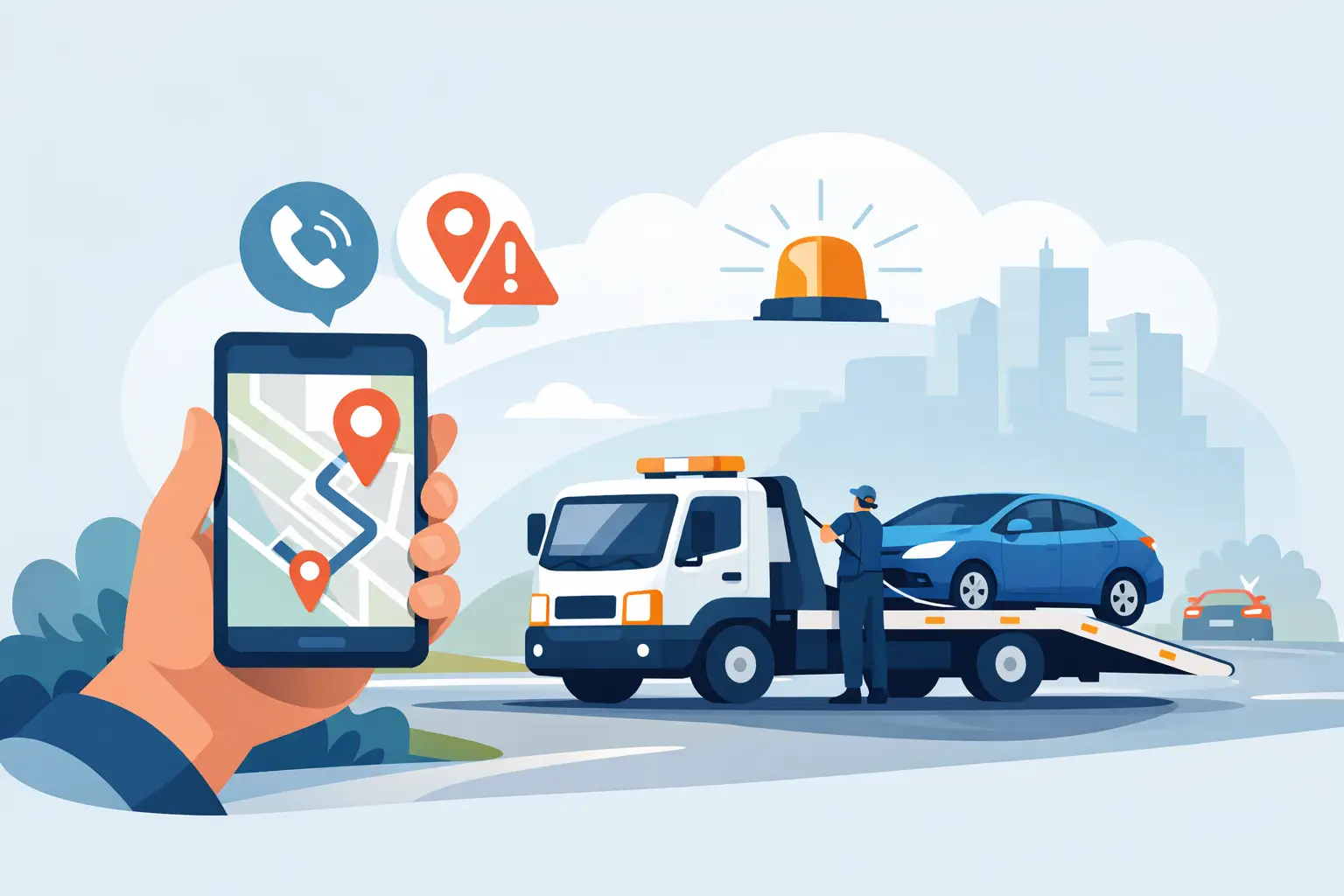
A dead car on I-15, a flat tire in a dark parking lot, or a fender bender during the morning commute can turn a normal day upside down fast. Knowing how to request emergency towing before panic takes over helps you get the right help moving your way without wasting time, money, or phone battery.
If your vehicle is stranded anywhere in Salt Lake Valley, focus on two things first: getting yourself out of danger and giving the towing dispatcher clear information. You do not need to diagnose the problem perfectly. You just need to explain where you are, what happened, and what kind of vehicle needs help.
Get to a Safe Place Before You Call
If your car is still moving, get it as far off the road as safely possible. Use a shoulder, parking lot, side street, or another protected area. Turn on your hazard lights right away. At night or during bad weather, keep your lights on if doing so will not drain an already weak battery.
On a busy highway, do not stand between your vehicle and traffic. If you can safely exit on the passenger side and move behind a guardrail, do it. If your vehicle is stopped in an active traffic lane, has been involved in a serious crash, is leaking fuel, or creates an immediate hazard, call 911 first. Towing comes after emergency responders have secured the scene.
You do not have to stay inside a vehicle that feels unsafe, but you also should not wander along the roadway looking for help. Stay visible, stay alert, and keep children or passengers away from traffic.
How to Request Emergency Towing: Have These Details Ready
A tow dispatcher can send help much faster when they have a clear picture of your location and vehicle. Before calling, check your surroundings for an address, cross streets, mile marker, exit number, business name, or recognizable landmark. Your phone map can help, but do not rely on a dropped pin alone if you can give a written location too.
When you request service, be ready to provide your name, callback number, vehicle make, model, color, and license plate if available. Tell the dispatcher whether the car is in a driveway, parking garage, highway shoulder, apartment complex, or off-road area. Those details affect the equipment needed and help the driver find you faster.
Be direct about the issue. Say whether the vehicle will not start, has a flat tire, was in an accident, is stuck in snow or mud, has a broken wheel, or cannot be shifted into neutral. A standard tow may be enough for a breakdown, while an accident scene or off-road recovery may require different equipment and more careful planning.
If you are locked out, out of gas, or dealing with a dead battery, mention that too. You may not need a tow at all. A jumpstart, fuel delivery, lockout service, or tire change can often get you back on the road for less than the cost of moving your vehicle.
Tell the Dispatcher What Could Slow Things Down
A few extra details can prevent the tow truck from arriving with the wrong setup. Let the dispatcher know if your vehicle is all-wheel drive, electric, lowered, oversized, heavily loaded, or parked underground. Some garages have low clearance, and some vehicles require a flatbed to avoid damage.
Also mention obstacles around the vehicle. Is it blocked by another car? Is a wheel locked, damaged, or buried in snow? Is the vehicle facing the wrong direction on a narrow street? These are not reasons to delay calling. They are reasons to give your towing company an honest heads-up.
If you are in an accident, avoid guessing about damage. Let the driver know what you can see: a bent wheel, deployed airbags, fluid under the car, a damaged bumper, or a vehicle that will not roll. That helps the tow operator arrive prepared to load the vehicle carefully instead of forcing it into a situation that could cause more damage.
Ask About the Destination and Price Up Front
Emergency situations make people vulnerable to surprise charges. Before approving the tow, confirm where the vehicle is going and ask how pricing works. The final cost can depend on distance, vehicle type, accessibility, recovery needs, time of day, and whether special equipment is required.
A simple tow from a parking lot to a nearby repair shop is different from recovering a vehicle from a ditch, transporting it across the valley, or towing an all-wheel-drive SUV after a collision. Clear answers upfront make the process easier for everyone.
If you have roadside coverage through insurance, an auto club, a credit card, or your vehicle manufacturer, you can check it while waiting. But do not let paperwork leave you stranded in an unsafe spot. In an urgent situation, getting a reliable local tow moving is usually the priority. You can sort out reimbursement details later if your plan allows it.
Take a Few Minutes to Protect Your Vehicle
Before the truck arrives, remove valuables, work equipment, medications, house keys, and important documents from the vehicle if it is safe to do so. Take a few photos of the car, especially after an accident or if it is being recovered from a difficult location. Photos can document the condition of your vehicle before transport.
If the car is going to a repair shop after hours, confirm that the shop accepts overnight drop-offs. If it does not, you may need the vehicle taken to your home, a secure lot, or another approved location. A dispatcher can help you think through the most practical option.
Do not attempt to hook up the vehicle yourself, even if you have a tow strap or a friend with a truck. Improper towing can damage the transmission, steering, suspension, or bumper. It can also put everyone nearby at risk, especially in traffic, on steep roads, or in winter conditions.
What to Expect When the Tow Truck Arrives
A professional tow operator will verify the vehicle and destination, assess the condition of the car, and choose the safest loading method. You may be asked to show identification, sign an authorization, and remove personal items. If you are not the registered owner, be prepared to explain your connection to the vehicle.
Ask where you should stand while the truck is loading your car. The safest place is usually away from traffic and outside the work area. Tow operators need room to position equipment, secure the vehicle, and check the connection points.
You can also ask whether you can ride with the driver. Policies vary based on the truck, insurance rules, available seating, weather, and the nature of the call. Have a backup plan for a ride if possible, especially after an accident or when multiple passengers are involved.
Choose Local Help When Time Matters
A local towing company knows the roads, freeway ramps, neighborhoods, and traffic patterns that can affect response time across Salt Lake, West Jordan, West Valley, Taylorsville, and Draper. That local knowledge matters when you are stuck during rush hour, in a crowded apartment complex, or on a dark road after a late shift.
Munnster Towing provides 24/7 towing, roadside help, jumpstarts, lockout service, fuel delivery, flat tire assistance, and recovery work for drivers who need practical help now. The goal is simple: get the right truck to the right place, handle your vehicle carefully, and get you out of a stressful situation without a painful price tag.
Do Not Wait Until the Situation Gets Worse
A car that is smoking, overheating, making loud grinding noises, or refusing to stay in gear is not a problem to push through. Continuing to drive can turn a manageable repair into major damage, or leave you stranded in a more dangerous place later.
If you are unsure whether you need a tow, describe the symptoms when you call. A straightforward dispatcher can help determine whether roadside service is likely enough or whether towing is the safer call. When your vehicle is not safe to drive, waiting for it to magically improve is rarely the budget-friendly move.
Keep your phone charged when you can, save a dependable local towing number before you need it, and remember that clear information gets help moving faster. The next time your car quits at the worst possible moment, take a breath, get safe, and make the call.
continue reading
Related Posts
Roadside emergency essentials help Utah drivers stay safer during breakdowns, flat tires, lockouts, and winter trouble. Build a car kit that works well.
Learn how to identify battery failure before a no-start turns into a roadside problem. Spot warning signs, test safely, and know when to call for help.
Need overnight tow truck availability in Salt Lake Valley? Get fast, affordable help for breakdowns, lockouts, dead batteries, accidents, and more tonight.