
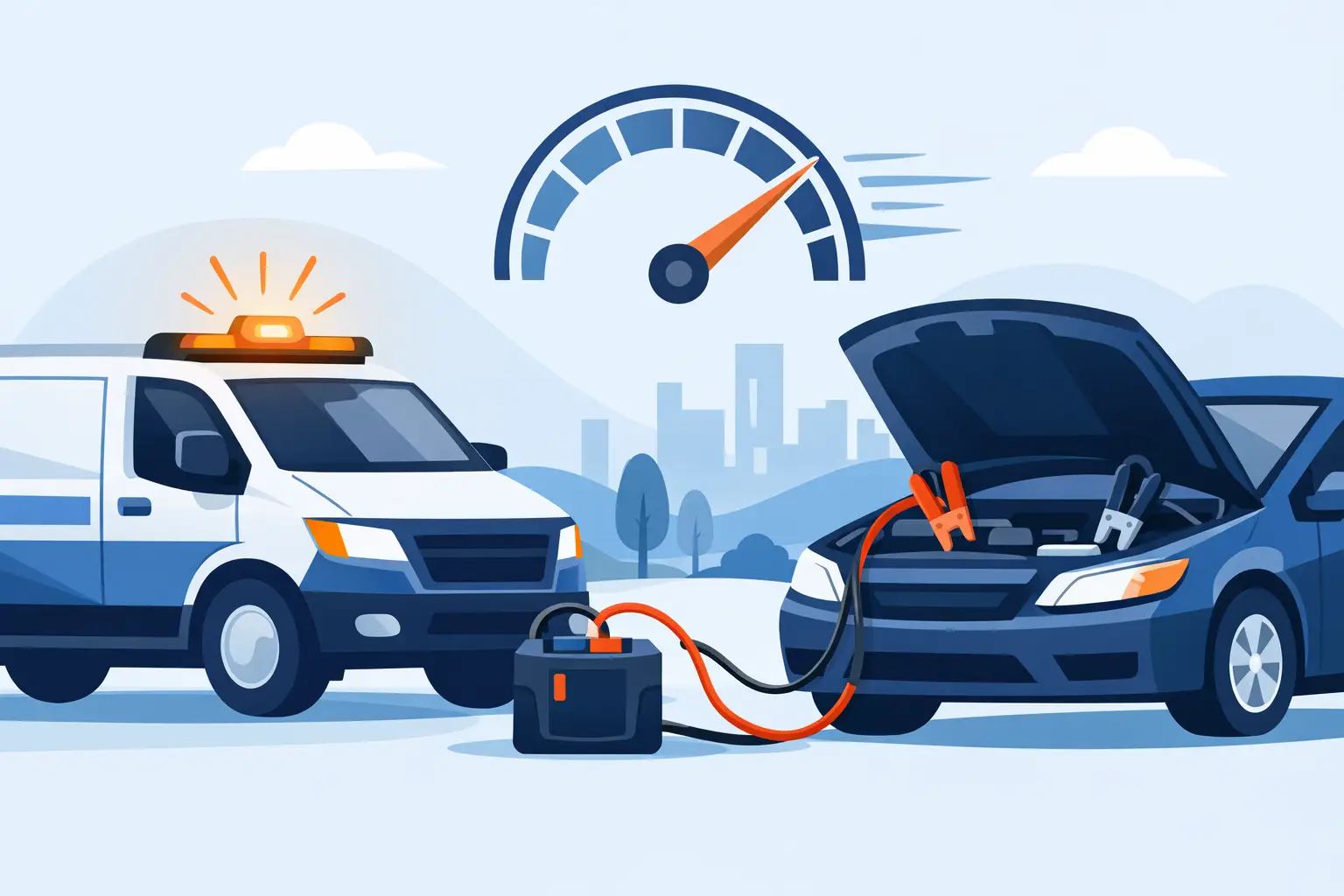
A dead battery has a way of picking the worst possible moment: five minutes before work, outside a grocery store with kids in the back seat, or late at night after a long shift. When the dash lights flicker, the engine only clicks, or nothing happens at all, a jumpstart service for dead battery trouble can get you moving without waiting on a friend, guessing at cables, or risking damage to your vehicle.
For drivers across Salt Lake Valley, the goal is simple: get safe, get help, and get back on the road fast. A professional jumpstart is often the quickest answer, but it also gives you a better idea of whether the battery is truly the problem or whether something else is keeping your vehicle from starting.
When a Dead Battery Needs a Jumpstart Service
The most common dead-battery signs are familiar. You turn the key or press the start button and hear rapid clicking. Interior lights look dim. The dashboard may light up, but the engine will not crank. In some cases, the vehicle appears completely dead.
Those symptoms often point to a drained or weak battery, especially if you left headlights on, a door did not fully latch, a phone charger stayed plugged in, or the car has been sitting for several days. Utah temperature swings can also be hard on older batteries. A battery that barely worked during a mild afternoon may give up during a cold morning commute.
Still, not every no-start situation is a battery problem. A single heavy click, no crank with bright lights, a security warning, or a vehicle that dies immediately after a jump can point to an issue with the starter, alternator, battery connections, or another electrical component. That is why it pays to have an experienced roadside technician take a careful look instead of assuming a jump will solve everything.
What a Professional Jumpstart Service Does Differently
Jumpstarting a vehicle sounds easy until you are standing in a parking lot with the hood up, traffic nearby, and no clue whether the cables are attached correctly. Modern vehicles have sensitive electronics, and improper connections can cause sparks, damage components, or create a safety hazard.
A professional technician arrives with the right equipment, assesses the battery and visible cable connections, and uses the proper jumpstarting procedure for your vehicle. Portable jump packs are often a safer, more controlled option than relying on another driver’s vehicle. The technician can also help determine whether your battery terminals are loose or corroded, whether the battery looks damaged, and whether a tow may be the smarter next step.
A jumpstart gets the engine running. It does not automatically mean the battery is healthy. If the vehicle starts but stalls soon after, or if it needs another jump the same day, do not ignore it. You may be dealing with a battery at the end of its life or a charging-system problem that needs repair.
What to Do While You Wait for Help
Your first job is not to fix the battery. It is to put yourself in a safe spot and make it easy for roadside help to find you. If you are in a parking lot, stay aware of moving vehicles. If you are on the shoulder, move as far from traffic as possible and avoid standing beside the roadway.
Before calling for service, have your location, vehicle make and model, and the symptoms ready. Mention whether you are in a garage, an apartment lot, a work parking area, or alongside a major road. Details like the closest cross street, business name, or highway direction can save valuable time.
While waiting, turn off accessories such as lights, climate control, audio systems, and chargers. If you are parked in an unsafe location, use hazard lights when possible. Keep children and passengers safely away from traffic, and do not let anyone lean over the battery or attempt a jump with damaged cables.
Avoid trying to jump the vehicle if the battery is leaking, swollen, cracked, smoking, or giving off a strong rotten-egg smell. Those are not normal dead-battery symptoms. In that situation, step back and let a professional assess the vehicle.
Can You Drive After a Jumpstart?
Usually, yes, but the answer depends on why the battery went dead. If you accidentally left a light on and the vehicle starts normally after a jump, driving for a while may allow the charging system to replenish some power. A 20- to 30-minute drive can help, but it is not a guaranteed fix for an aging or failing battery.
Try not to make a short trip, shut the engine off, and assume everything is fine. If the battery is weak, you could be stranded again at the next stop. When possible, drive directly to a trusted repair shop or battery retailer for testing. If the battery warning light comes on while driving, the alternator may not be charging the battery properly. Pull over safely and arrange a tow rather than continuing until the vehicle dies.
For hybrids and electric vehicles, the situation can be more specific. Many still use a 12-volt battery for starting systems and electronics, but their jump points and procedures may differ. Never guess. Follow the owner’s manual or call for professional help.
Why Batteries Fail Around Salt Lake Valley
A battery can fail without much warning, but there are usually clues. Slow cranking in the morning, intermittent electrical issues, dimming headlights at idle, and needing multiple attempts to start are all worth paying attention to. Most car batteries last only a few years, depending on driving habits, weather exposure, and vehicle demands.
Short trips are especially tough on batteries because the engine may not run long enough to replace the power used during startup. Corroded terminals can also block the flow of electricity, even when the battery itself still has charge. Then there are the hidden drains: a trunk light that stays on, an aftermarket accessory, a malfunctioning module, or a charger left connected overnight.
When you need fast help instead of a long lecture under the hood, Munnster Towing provides 24/7 roadside assistance for drivers in Salt Lake, West Jordan, West Valley, Taylorsville, Draper, and nearby areas. The focus is quick dispatch, practical help, and affordable service when your vehicle will not cooperate.
When a Jumpstart Is Not Enough
Sometimes the right call is not another jump. If your battery repeatedly dies, the engine will not stay running, the battery case is damaged, or the starter will not engage after a proper jump, you may need a tow to a repair facility. That is not bad news – it is the move that prevents you from wasting time, draining your budget with repeat service calls, or getting stuck somewhere less safe later.
A professional roadside technician can help you make that call based on what the vehicle is doing right now. The best solution is the one that gets your car handled correctly the first time, whether that is a jumpstart, battery replacement at a shop, or a tow.
Quick Questions About Dead Batteries
How long does a jumpstart take?
The actual jump often takes only a few minutes once help arrives. Total time depends on your location, traffic, weather, and current service demand. Calling as soon as you know the vehicle will not start is the best way to reduce the wait.
Will a jumpstart hurt my car?
A correctly performed jumpstart should not hurt a vehicle. Damage is more likely when cables are connected backward, terminals are severely corroded, or someone uses the wrong procedure for a vehicle with special jump points. That is a good reason to call for help rather than taking a risky guess.
Why did my battery die overnight?
It could be a light or accessory left on, an old battery, cold weather, loose terminals, or an electrical drain. If it happens more than once, have the battery and charging system tested soon.
A no-start does not need to turn into an all-day problem. If your vehicle is clicking, dim, or completely dead, get to a safe location, call for a fast jumpstart service, and let a trained roadside pro get you moving again.
continue reading
Related Posts
Roadside emergency essentials help Utah drivers stay safer during breakdowns, flat tires, lockouts, and winter trouble. Build a car kit that works well.
Learn how to identify battery failure before a no-start turns into a roadside problem. Spot warning signs, test safely, and know when to call for help.
Need overnight tow truck availability in Salt Lake Valley? Get fast, affordable help for breakdowns, lockouts, dead batteries, accidents, and more tonight.