
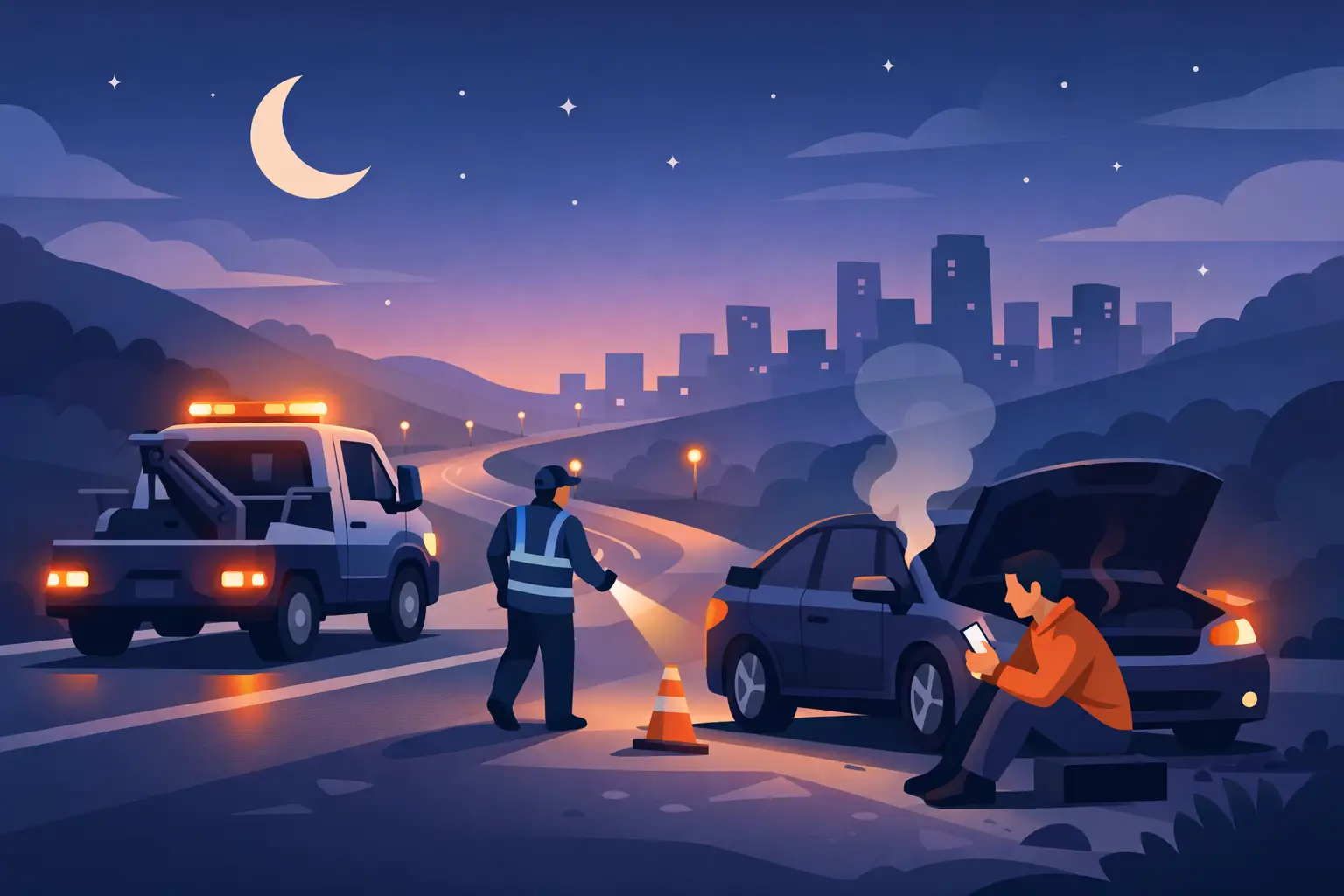
A dead battery in a West Jordan apartment lot at 11:30 p.m. is not something that can wait until morning. Neither is a flat tire on I-215, an empty fuel tank after a late shift, or keys locked inside your car outside a grocery store. After hours roadside assistance is for those exact moments: the inconvenient, stressful, usually dark hours when you need a real person to send real help.
For drivers across Salt Lake Valley, the goal is simple. Get to a safe spot, get your vehicle handled correctly, and get moving again without paying more than the situation calls for. A dependable 24/7 roadside crew can often solve the issue right where you are. When the vehicle cannot safely continue, a fast tow is the better call.
What After Hours Roadside Assistance Can Handle
Not every breakdown needs a tow truck with your car on the hook. Sometimes the problem takes a few minutes and the right equipment. Other times, forcing the vehicle to move can turn a manageable repair into expensive damage. The right service starts by identifying what happened and sending the appropriate help.
Flat tire service when the road cannot wait
A flat tire can happen anywhere, but it feels worse after business hours. Tire shops may be closed, traffic may be moving quickly, and a poorly lit shoulder is not the place to wrestle with a lug wrench. Roadside tire service can install your usable spare, provided the spare is inflated and the vehicle has the necessary wheel-lock key if one is required.
If the tire is damaged beyond a simple swap, the spare is missing, or the car is sitting in an unsafe location, towing is usually smarter. Do not keep driving on a flat tire just to reach home. That can damage the wheel, suspension, and tire beyond repair.
Dead battery jumpstarts
Cold Utah nights are rough on weak batteries. So are interior lights left on during a long shift, old battery terminals, and repeated short trips that never fully recharge the system. A professional jumpstart can get you going quickly, but it is also worth paying attention to what happens next.
If the engine starts and stays running, you may be able to drive directly home or to a repair shop. If it dies again shortly after the jump, the battery, alternator, or connection may have a bigger problem. In that case, another jumpstart is not a long-term fix. Arrange a tow rather than getting stranded a second time.
Car lockout assistance
Locked keys in the car can turn a normal evening into a headache fast. Modern vehicles are especially tricky. Improvised tools and online tricks can scratch paint, bend a door frame, damage weather stripping, or interfere with electronic locks.
A trained lockout technician uses the right equipment to open the vehicle with care. Have your identification and proof that you are authorized to access the car ready. It keeps the service quick and protects everyone involved.
Emergency fuel delivery
Running out of gas happens to experienced drivers too. A detour, a broken fuel gauge, a long commute, or a late-night rush can leave you on empty before you reach the next station. Fuel delivery gets enough gas to help you reach a nearby station safely.
Be clear about your vehicle’s fuel type when you call. Gasoline and diesel are not interchangeable, and guessing is a mistake nobody needs at midnight. Once you are back on the road, stop for a full fill-up as soon as possible.
Towing and vehicle recovery
Some problems call for more than roadside service. Collision damage, overheating, a failed alternator, a vehicle stuck in snow or mud, and mechanical trouble that makes driving unsafe all require a tow or recovery. A careful operator can move the vehicle without adding avoidable damage.
Recovery work depends on conditions. A vehicle off the pavement, lodged in a ditch, or stuck on a snowy incline may need specialized equipment and a safe plan before it can be pulled out. The lowest quote is not always the best value if the job requires experience and careful handling. Ask for clear pricing and explain exactly where the vehicle is sitting.
What to Do While You Wait for After Hours Roadside Assistance
Your first job is not fixing the vehicle. It is staying safe. Pull as far from moving traffic as you reasonably can, turn on your hazard lights, and avoid standing between your car and the roadway. On a busy freeway or a narrow street, staying inside with your seat belt fastened may be safer than getting out.
When you call for help, give a precise location. The nearest cross street, freeway direction, exit number, parking lot name, or a recognizable business can save valuable time. If your phone map shows a pin, use it to confirm where you are. “Somewhere near Salt Lake” is hard to dispatch. “Southbound I-15 near the 4500 South exit” gets help moving faster.
Tell the dispatcher the vehicle make, model, color, and the issue you are facing. Mention anything that affects access or safety, such as a locked steering wheel, a car in a parking garage, a low-clearance area, accident damage, or a vehicle partly off the road. Honest details help ensure the right truck and equipment arrive the first time.
If you are stopped in a dark area, keep your doors locked and only interact with the service provider you requested. A legitimate technician should be able to identify the company and confirm the vehicle information you provided. Trust your instincts. Your safety matters more than saving a few minutes.
When Roadside Help Is Better Than Calling a Friend
A friend may be able to bring a gas can or help change a tire in a quiet driveway. But after hours, the situation often comes with traffic, darkness, weather, and limited access to tools. A roadside technician brings equipment built for the job, plus the experience to make a quick call on whether the vehicle should be driven or towed.
This matters for newer cars, too. Electric parking brakes, low-profile tires, electronic shifters, all-wheel drive systems, and sensitive body panels can complicate what used to be a simple fix. The wrong towing method or an attempted DIY unlock can create a repair bill far bigger than the original problem.
Professional help is also the practical option when you are alone, traveling with children, headed home after a shift, or managing a rideshare schedule. Waiting is frustrating, but trying to handle a dangerous roadside situation yourself is not a bargain.
How to Get Faster, More Affordable Help
Fast service starts with good information, but a little preparation makes a difference before trouble hits. Keep your spare tire checked, save a reliable local roadside number in your phone, and make sure your vehicle registration and insurance information are easy to find. If you use wheel locks, know where the key is stored.
Price can vary based on distance, time, vehicle type, access, and the work required. A simple jumpstart in an accessible lot is different from recovering an SUV from a snowy ditch. Ask what is included in the quoted service and whether there are additional charges for mileage, recovery equipment, or difficult access. Straight answers upfront help you avoid surprises.
Munnster Towing provides 24/7 assistance for drivers who need a jumpstart, lockout service, fuel delivery, tire help, towing, or careful vehicle recovery across the Salt Lake Valley. The focus is on getting there quickly, doing the work right, and keeping the cost reasonable when your night has already gone sideways.
Do Not Wait Until the Problem Gets Worse
A blinking battery light, a tire losing air, or an engine that is overheating can become an after-hours emergency if you keep pushing your luck. Pull over early when it is safe. A quick call for help is usually easier and cheaper than a breakdown in traffic, an accident, or damage caused by driving a vehicle that is telling you to stop.
When your car quits after dark, you do not need a complicated plan. Get to the safest place you can, share your exact location, and call for after-hours help. The right roadside service turns a bad stop into a manageable delay, so you can get home, get to work, or get your vehicle where it needs to go.
continue reading
Related Posts
Learn how to identify battery failure before a no-start turns into a roadside problem. Spot warning signs, test safely, and know when to call for help.
Need overnight tow truck availability in Salt Lake Valley? Get fast, affordable help for breakdowns, lockouts, dead batteries, accidents, and more tonight.
Learn how to prepare for a winter breakdown in Salt Lake Valley: check your car, pack supplies, and stay safe while roadside help is on the way all winter.